We only have three weeks of school left, the green baby leaves have finally outnumbered the gray tones, and I’m sitting in my living room wallowing in jello-like humidity (which I know is only a whisper of what’s to come, but in comparison, it’s for sure a hearkening). Clearly, Summer is almost here.
I’ve been mulling over what we want to do this summer: Hopefully, lots of gardening, river floating, and playing football or basketball in the morning after we’ve slept in, eaten homemade crepes, and read books together (one can dream, right?). But when I was thinking back to what has worked in previous summers I realized there is a clear winner that has threaded its way through all of our summers since my oldest was a wee lad.
Yeah, I know it’s kind of old school at this point, but I swear it really does painlessly teach fast arithmetic facts. I’ve always called it their “summer vitamin” and no one has really balked at it much, although that may be because it takes less than 10 minutes and has a clear beginning and end.
I don’t like to use it during the school year because Saxon takes so long that even ten more minutes feels like a duel-worthy insult, but I like to pull Xtra Math out in the summer just to keep everyone’s minds sharp.
And if we don’t get to it because we’re camping or picking ticks off, well then…that’s ok too.
This expository is to remind future me: I started Scholarforge to help kids (and mamas).
When God was handing out brains and personalities, he gave me the one that gets very distracted by shiny things (in this case, shiny new ideas). I would totally have gotten lost if I were Hansel and Gretel. There would have been no trail of crumbs, or “scarlet thread” going through the Labyrinth. I probably would have gone all Swiss Robinson family and built a treehouse next to the witch’s candy hut and turned the minotaur into a pet (or more realistically perished in the process, but who’s counting?). Consider this me staking a flag in the ground to remind myself why I’m doing this.
I came up with the idea for Scholarforge because I really do love teaching and firmly believe every kid is just one step away from a breakthrough. Trying to build those bridges across rocky terrain is what gets me up in the morning. Whether it’s reading, writing, or executive function, I’m here for the front-row seat. I know it’s hard to watch kids struggle, and get frustrated…lash out in anger, and feel defeated, discouraged or dumb, but I can’t help but immediately start brainstorming ways to work through it all.
Sure I have lots of lofty aspirations. My goal someday is to have a reading program that is as simple to use as 100 Easy Lessons, as colorful as The Good And The Beautiful, and as in-depth as Spell To Write And Read/Writing Road To Reading. I’d love to make Latin accessible to everyone, churn out all kinds of helpful things to create solid spellers…oh and create a formal logic curriculum that treats anxiety and depression with truth tables, but I may need several lifetimes for all that. In the meantime, I still have four kids who can’t do half those things, but in umbra igitur pugnabimus (we struggle on regardless).
BUT… Even if I don’t have all the fancy glossy books published yet, I always have a sympathetic and listening ear available. And somewhere in the depths of my Canva and Google drives I also have spelling songs, countries and capital songs, fun mnemonic ways of remembering the Ten Commandments, and a whole host of other things, so feel free to hit me up if you need something. You can find YouTube geography tutorials here and how to remember the Latin Declensions here. Andria and I wrote a Latin Curriculum you can buy here that can be used by anyone anywhere but is especially helpful for Challenge A kids. I also drew blackline maps for the whole world so kids could trace/draw and color the world in peace without struggling with curved projections and bubbly confusing graphics (you can find those here).
I know it’s all a small drop in the bucket, and I totally understand that not everything will work for everyone.
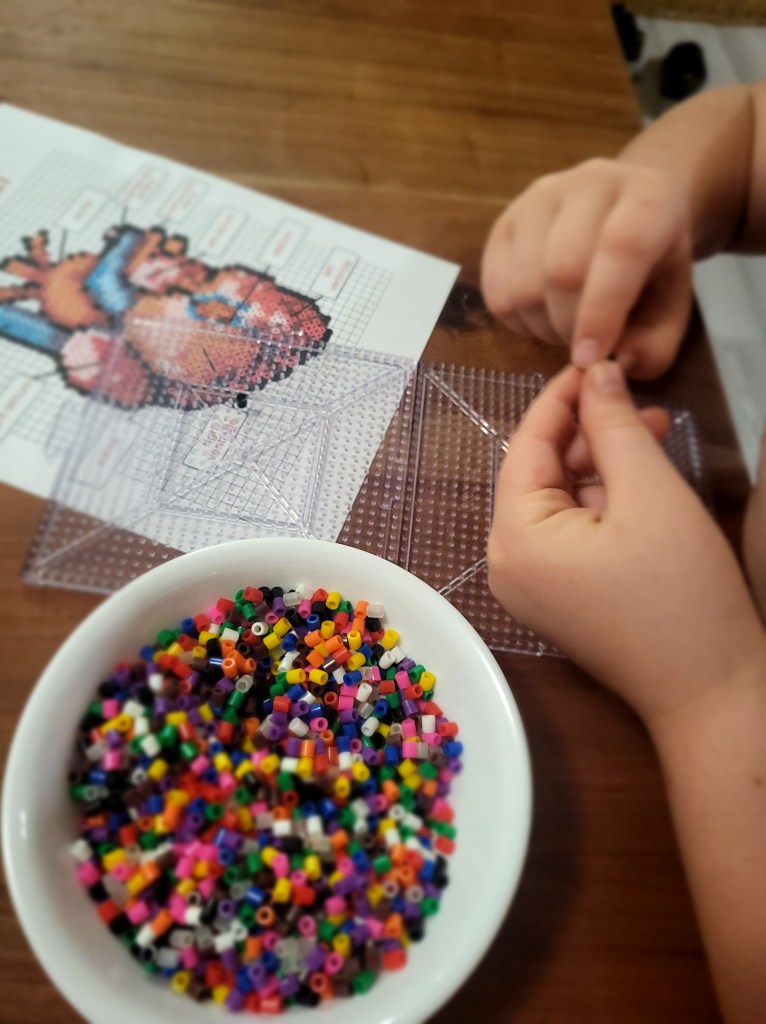
Yes, it’s every mother’s favorite type of project: Something that includes hundreds of tiny pieces. Perler beads.
Somehow I have managed to avoid these little monsters for years. They fall into the same category as “Toddlers with Fruit” in my book i.e. the fun stage of life when your three-year-old asks for a banana and then promptly has a meltdown because you peeled it… or didn’t peel it, or they peeled it and saints preserve us it broke in half. Perler beads are similar in that they are prone to all kinds of catastrophe, someone bumps the table, a sibling jostles an elbow, or they don’t iron right, and holy Batman the drama and meltdowns ensue. The only difference is that Perler beads don’t contain important nutrients like potassium so at least you don’t have to feel guilty if you refuse to stock them in the house.
It’s my own fault really. I was hoisted on my own petard. One of my children who shall remain nameless, was making future plans to be an electrician and I took the opportunity to mention, and encourage oh-so-kindly, that he ought to work on his fine motor skills if he wanted to go into a profession that is basically the art of harnessing magic traveling in various amounts of strengths (and speeds) in waves across various intricate mediums. Convince me I’m wrong.
And that is how I found myself the proud owner of an 1100-piece bag of Perler beads. I mean we must work on said fine motor skills. And of course he remembers the activity that most helped his fine motor skills was the few times I allowed Perler beads into the house. And he would have no problem sitting still and focusing for long periods if only he had something like Perler beads to work on. The thing is, he’s right. They did really help his fine motor skills last time. And he did super focus. Bah.
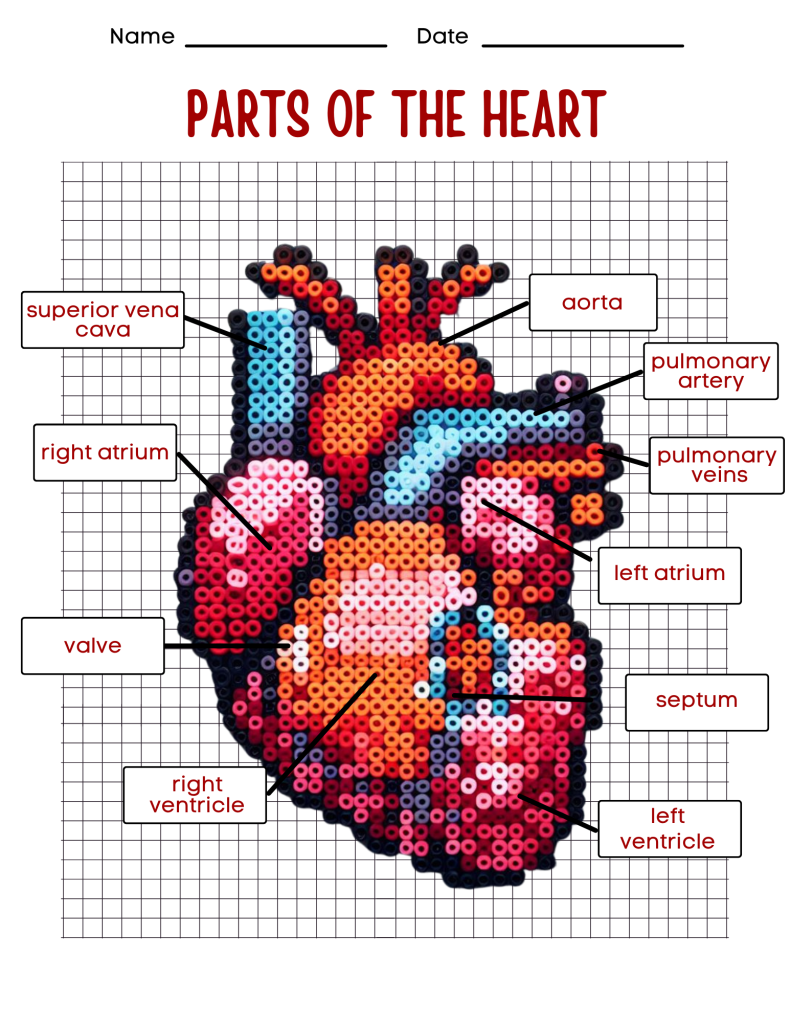
But in the end, we compromised. We’re wrapping up our unit study on human anatomy right now, so I figured if we’re going to do this, we’re going to gosh-darn do it right with a (mostly) accurate anatomical heart made entirely out of Perler beads.
I gift you with the tutorial/pattern/worksheet below. You’re welcome…er… I’m sorry. Pass on my apologies to your vacuum cleaner.
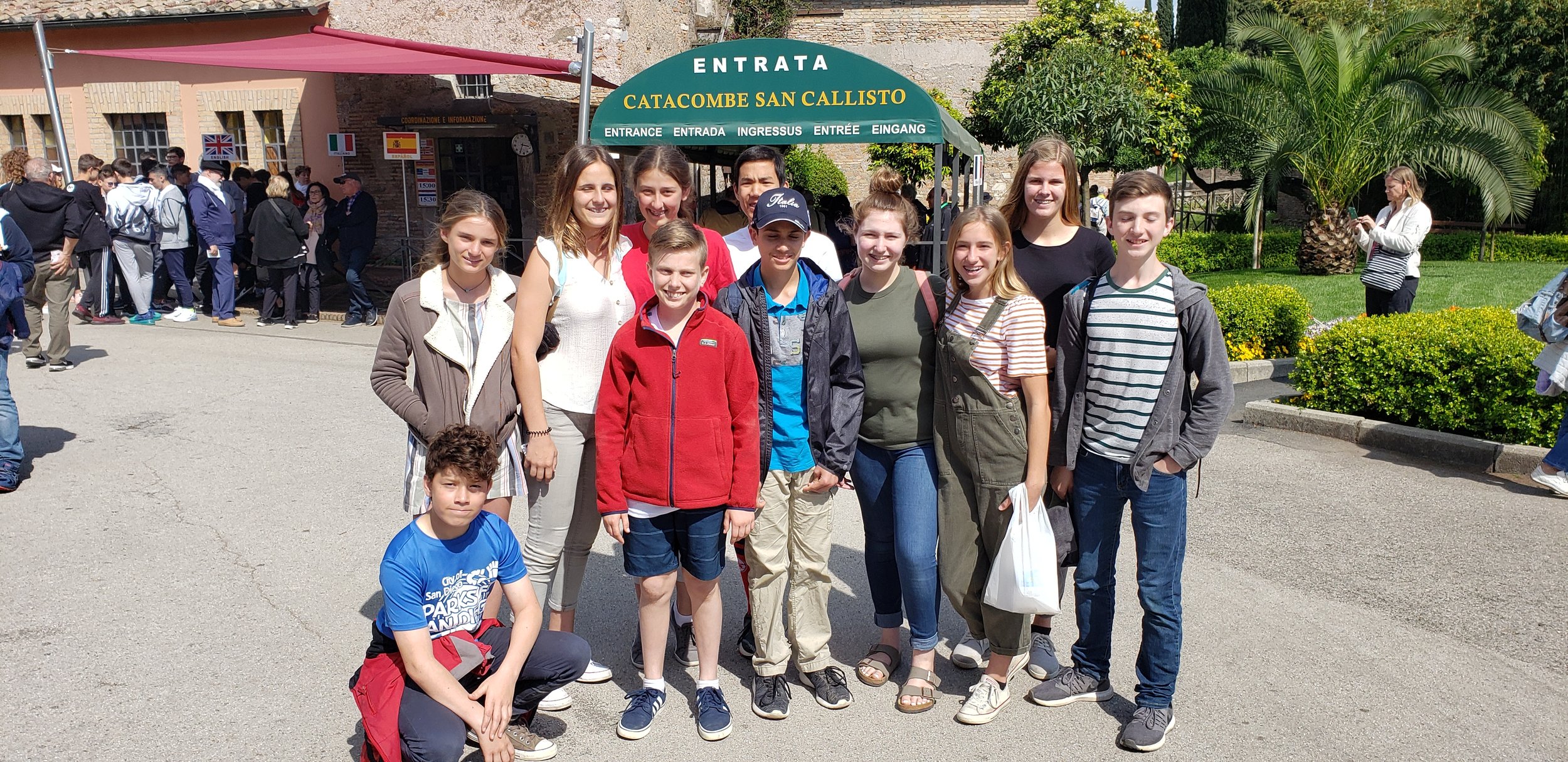
Once upon a time, we took our Classical Conversations Challenge B class to Rome and it was life-changing.
As we were sitting in church tonight for our Good Friday service, something in the sermon reminded me of the Rome Catacombs (not to be confused with the Paris Catacombs…cough cough). So I’m reposting my blog/journal entry from that epic homeschooling field trip here. (maybe mostly to remind myself that I need to take the next batch of students to Rome).
Today was the last full day in Rome and each day I’ve thought was the best… so of course today was no different. At one point I was flying down the infamous Appian Way in a taxi listening to 70’s music, discussing the resurrection message we’d just heard deep under the earth in the catacombs, and I had to pinch myself to make sure I wasn’t dreaming.
Jamie and I started out the day with cappuccinos and chocolate croissants like we always do. I kinda never want to see a chocolate croissant again, but the coffee I will miss. Not that we don’t have good coffee in San Diego, but our truly good coffee has to be sought out like the holy grail, whereas it’s on every street corner in Rome. …Actually, that’s how Rome is in general. Our most glorious basilica in the United States is copied and pasted a hundred times in Rome. In Rome, you’ll be walking around a church trying to take it all in and figure out which painting is the Raphael you’re looking for, when you find out the church’s relic is Baby Jesus’s manger. Jamie said he didn’t really picture the nativity with a manger of intricately wrought gold, silver, and jewels,…which is what it looks like… but the humble wooden manger is protected inside of it. (The jury’s out in the academic world on whether it really is the authentic manger).
The religious lines got a little wonky for me today. I’m a happy protestant who grew up Evangelical but appreciates the beauty of the more liturgical Presbyterian church. I used to be staunchly reformed and Calvinistic on all things (and I still am), but the older I get the more “big tent” Christian become. In some ways, I think of each type of Christian as a genus that’s entrusted with doing one thing (or a few things) well. The Roman Catholic church has the market on tradition, loyalty, and engaging all five senses.
We went to the oldest church in Rome and I could picture the early home church that started on that spot, and I could see its transformation through the ages, and I could witness people worshipping Christ today. Across the street from the oldest church, there are stairs where Jesus allegedly walked up to his trial (Constanine’s mother brought them from Herod’s palace in Jerusalem). The marble steps are so worn and sloped from thousands of years and millions of Catholics kneeling and praying on them, the steps have been closed for the last three hundred years. They’re open now. For a few months, you can pray on your knees up the twenty-some-odd steps. Even if they aren’t the real stairs Jesus walked on (I can’t turn off the rational part of my brain), it was a moving scene.
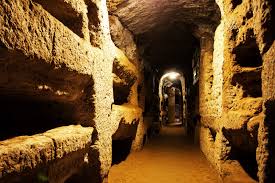
I didn’t think anything could top the manger, Herod’s stairs, and the oldest church, but the catacombs were the next thing on the itinerary. I was nervous because it had proved super challenging to get tickets for our group. The lines are long and limited everywhere (and for almost everything) in Rome. So in order to get 22 tickets for anything, we had to book them in advance. The Colosseum, Borghese, and the Vatican were all challenging in their own way, but the catacombs were most difficult on the front side due to the language barrier, specific rules, and lack of 21st-century technology in use to aid communication halfway around the world. After much angst and multiple tries (and being hung up on several times), all I had was an email that said “Your reservation is confirmed”. No order number, no mention of what that confirmation entailed. It worked out perfectly though. A sweet old Italian gentleman had our tickets reserved for us on his handwritten list (the couple behind us were from San Diego too!). All of the guided tours that go through catacombs (and aren’t third-party tours) are led by a priest. Ours was Father Tren. He didn’t look like a stereotypical catholic priest. He was wearing jeans and a sweatshirt, was young, and had a dry sense of humor. He preached the gospel with such sincerity and passion: Though the catacombs are deep underground, dark, and filled with the dead, it is actually a place of hope. Hope in the resurrection. At the end, he prayed for us, that we would be encouraged and strengthened not to get discouraged. To remember those who came before us. To rest in the saving power of the cross. Even the atheist was moved. There are 500,000 Christians buried down there, with marble slates filled with Latin and Greek…lots of them with misspelled words and grammatical errors. The walls are filled with scratchings of messages “I miss you.” “We will see each other again.” “May God be with you”. Father Tren called it “Devotional Graffiti”.
We finished the last day with the usual three-hour dinner from 8pm to 11pm, we’ve got lazy our last few days in Rome and have been eating at the restaurant right next door. The servers gave us hugs tonight and told us to come back…which was big of them. I could never quite tell if they had a panic attack every time we walked in with 12-18 people or if they appreciated the business we brought. Jesse wins the prize for the most adventurous eater this trip with fried sheep brain for first place, and Ben is right behind with squid for second place. Honorable mention to a parent for the consumption of tripe. Jamie wins for most gelato consumed, and Hayley wins for most candy consumed. My favorite dish was veal and artichokes and I will miss being able to enjoy a glass of wine. It didn’t give me a migraine like it does in the States which makes me think it was all in my head in the first place (pun intended?). Maybe I should give wine another try, or maybe I’ve grown out of it.
Not ready to leave, but feeling like a homing pigeon who needs to set the course back for home. I’m not actually a very adventurous person. I don’t particularly love to travel, and I much prefer my own home and people. But my ideas get ahead of what my biological self prefers to do. Thus the conundrum of magical trips like these (but so worth it).
Taking uninterested children to museums and field trips is BRUTAL. On one side you tell yourself that your children need to be educated and cultured and have their horizons expanded, on the other side you have the students/children themselves who are loudly protesting how much they hate said field trip. And then you have all the older responsible folk who are all “when I was a kid, we didn’t complain about…”.
And while you’re trying to internally juggle all the things, you’re also trying to pretend that you have nothing else in the world to do than make everyone happy. You’re not also wondering how you’re going to grade papers, get dinner on, feed the dog, schedule the orthodontist appt etc. I mean, I don’t know about you, but I live for bridging the gap between cranky docents who think “children should be seen but not heard” and said children who are convinced the world is devoid of food and fun.
Now that I think about it, I’m not being sarcastic…that’s literally what I live for. I think I may genuinely enjoy bridging that gap between the old and the new.
But I digress.
I happen to so privileged as to live within bike-riding distance of where the Little House On the Prairie series was written. That’s right. The real Laura Ingalls Wilder herself, wrote the famous books not a stone’s throw away from my house. Consequently, my children have been once…or twice…or several…ok many times to the original homestead tours and museum. So when our CC group had a field trip there, I knew I was going to walk that fun tightrope between the out loud “of course we’re going!” and the intense hushed “yes we are going and you are going to be polite and listen to the tour guide and say “yes ma’am and thank you”.
As I was agonizingly doing math with the youngest beforehand, in an attempt to get school done “early”, I realized I was going to need a backup plan. Having been before, I was mentally imagining a bunch of elementary-aged boys (and girls) trying to squeeze into the tiny 120-year-old kitchen filled with priceless artifacts. AND they were successfully supposed to not move or touch anything. Lord have mercy. So I came up with a “scavenger hunt”.
Now granted, I know this is harder to do if you’re traveling and don’t know what you’re getting into, but I think it’s really a fantastic plan. Kids like goals. Kids like tangible things. Sometimes their brains are too underdeveloped to match the grammar with the rhetoric, so they need a bridge. The bridge in this case was an orange wet-erase marker and a laminated sheet of notebook paper. I scribbled down 15 things for them to find and answer, and I evenly divided the tasks between the exhibits and the museum. The reward was a stick of “Penny candy” that now costs 40 cents. Ho hum. Economics lesson aside, I would happily pay 40 cents per kid in order to not get permanently banned from a museum. Of course, the plan did backfire on me when the kids were SO EXCITED to see Pa’s fiddle and to see where Laura lost the money for her homestead, that they went in like a drove of invasive grasshoppers, and promptly got their butts set down by an elderly docent. By the time I sauntered in (a few moments behind them), she was already wrapping up the “don’t make noise, don’t touch anything, don’t breathe on anything” lecture and was ready to launch into the “how to be a responsible chaperone lecture.” What she didn’t know, was that I am happy to take one for the team, in fact, I’d be happy to have her come lecture my children every morning, but she didn’t seem interested in that. Shocking.
After the field trip was over, my kids said it was the best field field trip ever. So. much. fun.
The key really was the “scavenger hunt” (and maybe the presence of their friends, but who’s counting). Everyone needs a job or a mission, and I totally get it! When I was in Paris, I had a mental checklist of everything I wanted to see, and learn, and understand. Why would kids be any different? They just need a little abstract hand-holding.
I’m going to start doing this every time I find myself chaperoning a field trip where I know I’m going to be in over my head. However next time I’m going to have a chat with the Gift Shop Lady first, and I’m also not going to forget all my scavenger hunt stuff on the table. I’m wondering, should I go back and get my pens and paper? Cut my losses? Save face? or chalk it up to a good laugh?
Also, if you ever come to visit, I will happily show you where Laura and Almanzo’s secret cold spring is, and tell you all the “exclusive conspiracy theory” stories.
I am loving this school year so much. 9th graders are so much easier than 7th graders (although full confession, I feel like middle school is probably my calling in life). Middle schoolers are like the toddlers of the teenage years. They’re so cute, but kind of a lot.
However… (and that’s a big however). I don’t know if it’s post-covid, or a Gen Z thing or what, but I guarantee you your average high schooler has the ability to break any object lesson or activity that has worked for decades. There is nothing Gen X or Millenial teachers and parents can come up with that Gen Z can’t hack in a nanosecond.
Case in point: We did an “Inflation Game” today with very specific instructions. I was supposed to use beans and candy, but beans are boring and candy is for kids, so I took some floral rock-crystal-things I had and a cheap bag of hostess donuts (don’t judge). I handed out 5 crystals to each student and then offered to “sell” a donut for 10 crystals. This is supposed to be unsuccessful. According to my instructions no one is supposed to be able to buy a donut, thus proving that when money supply is low, inflation is low. You can imagine how well that went.
When I was prepping this activity a few days ago, I dryly predicted to Jim that it would take less than a second for two kids to combine their “money” and buy a donut since a half donut is better than none. I was correct. What I didn’t predict was that kids would start trading their snacks with each other for crystals, thus creating a bartering system outside of my controlled system (I feel like there’s a lesson there).
But it didn’t stop there. For the second part of the activity, I was instructed to give each student several handfuls of “money” (without counting to see who got more or less) and then start an auction for the donuts. As expected (and carefully explained in the directions), the extra money supply drove up inflation. What I didn’t expect is that monopolies quickly formed and two kids were in danger of getting absolutely every single one of the donuts before anyone else got a single one. So the rest of the class banded together and blocked them.
Strong feelings and opinions flew back and forth. At one point they discussed mobbing me and just taking the bag of donuts. I felt the weight of a thousand dictators weighing on my soul. It was dicey for a few moments.
All that to say, I think we learned more about economics in fifteen minutes than we have from any book. And if you try this…don’t say I didn’t warn you.
Some of these are not new ideas, but they work. Reading has not come easy for any of my children…not one. And while some of them are more bookwormish than others, here are some things that drastically improved reading around here:
Set a timer and have them pick a new reading nook from a handful of unusual places…in trees, under couches, on mom’s bed piled with a hundred pillows. My kid’s favorite place is on a random camping chair in the middle of a field. They fight over it. Don’t ask me why.
Watch a summary/cartoon/synopsis first on YouTube, or watch the movie (if there is one). I know this is super horrifying and feels backward, but for whatever reason I swear it works. Especially if they’re trying to read something far above their comfort level (like Shakespeare or an older book). It’s like their brain is free to actually absorb and enjoy the book if they aren’t completely confused trying to keep characters and milieu straight.
Let them read super stupid books. Bad Guys was a great gateway drug. It made them feel like they were reading a real book. Diary of a Wimpy Kid. Dog Man…and Big Nate are all things I internally groan over, but they got the job done. Reading confidence progresses way faster.
Cleaned up our diet. Every time we cut out processed foods and eat super fresh nutrient-dense food, they jumped reading levels. It’s so obnoxious. I wish it didn’t work. I can never seem to maintain healthy eating for long stretches (especially because I love the social bonding that happens over food), but it’s always worth it when I do.
Offer to do their dishes or chores but only if they read aloud to you (or read quietly to themselves too…I’m not too picky). My mom used to employ this trick for all sorts of things…mostly music practicing. I won’t say how old I was when it finally dawned on me what she was doing. Ha.
There are of course lots of things that go into building solid confident digesters-of-written-language, and this list doesn’t even touch on the struggles some kids might have to overcome, but these are all little things that helped push the rock up the hill.
People hate on personality tests and paradigms, but I unabashedly love them. Sure, I get it. Are they perfect? No. Are they backed by Science? Maybe a few of them…kinda sorta. Do people use them to excuse all kinds of bad behavior? I’m definitely not guilty of that…ahem.
The reason I think they’re helpful though, is because the human brain can’t help but see patterns. And then we’re like If You Give A Mouse A Cookie. Once we start seeing patterns, we start separating things into categories, and then we start mentally building projections. If those predictions are right, we start to build whole systems. I genuinely think we can’t help it. Most of us do it subconsciously. Of course they aren’t ever going to be perfect systems because humans are infinitely complex, but they sure help navigate life. And I don’t think I could navigate classes, kids, and meetings without them.
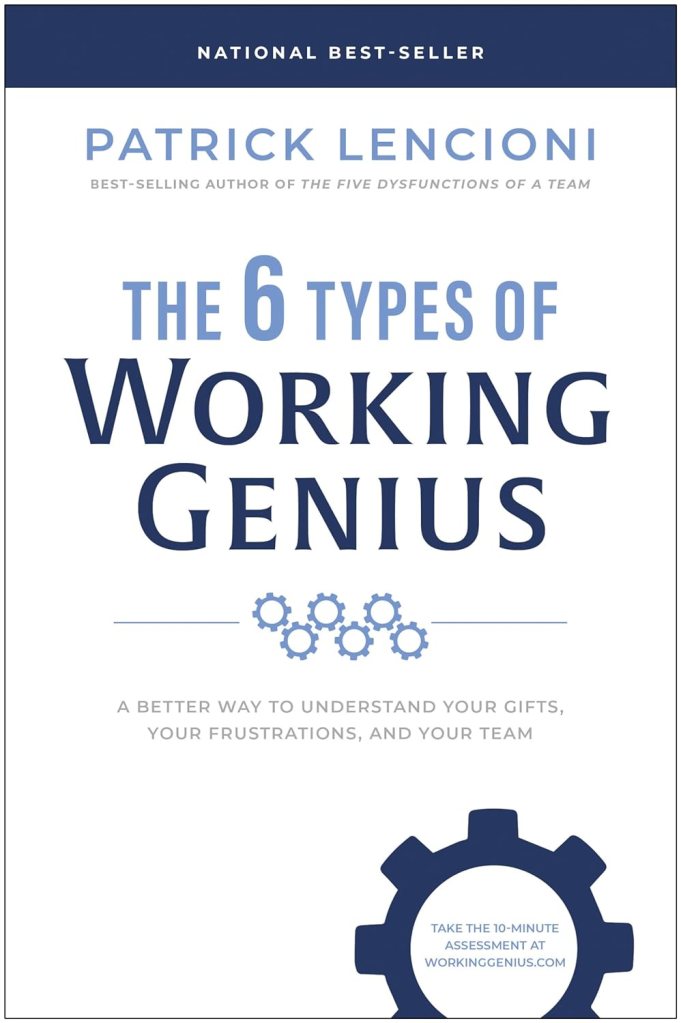
The 6 Types of Working Geniuses. This is the number #1 book that changed my outlook on life last year when I was super discouraged and felt like I was swimming uphill with two swimsuits and concrete boots on (was that enough mixed metaphors?…maybe add a Sysphyian rock). Yes, it’s a business book, but sometimes those have the best crossover takeaways. This one helped me figure out how to work with families, students, tutors, and my own kids, because instead of being a personality book that’s more about you, it’s more about how a group works to get things done. Some people hate the “story” format, others love it. I was more in the former category but it wasn’t so bad I couldn’t get through it to get to the good stuff. It’s also a super quick listen on Audible if that’s more your thing. (If you read or listen to it, I’m dying to know what your geniuses are)
2. Myers Briggs Cognitive Functions. This goes beyond your basic “extrovert/introvert/judging” dichotomy. If you’ve ever heard someone criticize Myers Briggs because they don’t want to be boxed in, or there’s no way there are only sixteen types of people in the world, “cognitive functions” is the key they’re missing. There are a million books on the topic, but I like this internet article, along with a little interactive chart that tells you what the various function stacks are. This helps on a more practical level with kids and learning styles. I notice my students/kids’ dominant functions pretty quickly and then can modify or customize the learning for them.
3. Gorilla Mindset. This book is definitely in the “Dude-Bro” category, but I’m including it here because he has more practical and tangible ways to have a growth mindset instead of the more esoteric theoretical stuff. I’ve used it to help multiple kids work through meltdowns and it’s especially helpful for the kids who are perfectionists and spiral. The ones who go from “I can’t do this math problem” to “What’s the point of life, I’m the worst/stupidest/dumbest kid ever” in a nanosecond. I don’t agree with everything he says, so don’t just hand it to a kid, without reading it first, but it has some useful tips.
I always feel leery talking about this kind of stuff in public, because it generates such strong opinions from people. So if you’re the type of person who likes things to be black and white, or finds this sort of thing super obnoxious, or thinks that business books are actually written by aliens that Elon Musk has hired to take over the world…then definitely just hit “skip”. I’m more of a “glean and use what you can” kind of thinker.
Putting this here to prove to my future self I’m not crazy when (if) it changes again.
You know you’ve been in Classical Conversations a long time when they’ve switched the memory work on you multiple times, and you feel gaslit by an otherwise charming and lovely curriculum. lol
It’s not CC’s fault… well it is, but it’s understandable. They occasionally update their curriculum and it’s not their fault I was in my 20s and had two kids when I started CC and I’m now in my 40s with four kids (and the kid who started CC as a 5-year old is now an adult). There were some good old days back there when I was a Foundations tutor and pregnant with my third and would have to run for the nearest trashcan while a kind mom took over my class for a minute. Now I’m just a cranky old Challenge director giving highschoolers the stink eye when they eat snacks through a heart-rending discussion about the Scarlet Letter.
We printed these sheets, laminated them, and we sing them every morning of Cottage School so the kids have them down pretty good by now although the English is so different from the regular translations we’re used to, that we’re still messing that part up. I think the idea was to pick a translation that more matched the Latin, but if you’re a Challenge director, you will find yourself explaining that half the words are wrong from what they’ll be told in Challenge A, but whatcha gonna do. This is why people have dedicated their whole lives to translating Scripture.
This is a small story that features a few homeschooling moms doing life together and me eating my words.
I teach high school Latin at our little cottage school and I’m not going to lie, it’s rough going some days. I occasionally (jokingly!) wonder what I did in a past life to deserve loving Latin so much. Like why couldn’t I have been a surfing instructor? Or teach kids to ride horses? I get jealous of the kids’ jiujitsu instructor. They absolutely love her. The tougher she is on them, the harder they work and the more they respect her. But jiu-jitsu is way cooler than Latin. It’s really not fair. I mean, how did I get stuck trying to impart the love of dead languages to the next generation? It’s like I chose this life or something.
My esteemed prodigies really have learned a lot though this year, and I’m proud of the trenches we’ve slogged through. So proud that I got a teeny tiny bit defensive on their behalf when Andria brought in an entire booklet of charts for them to work on. They’re doing great! They don’t need charts! Away with the charts! In her defense, she just got a spiral binding machine and if that was me, I would be printing and spiral binding everything in sight (right after I laminated it).
After I passionately and eloquently pleaded the case against repetitive charts, she brought out the big guns by invoking the name, “Mrs. Owen”. She basically has homeschooling sainthood status in our house at this point. Back in the early days of cottage school, back when we lived in California, and the boys were wee young lads, she was the one who got everyone doing brain training exercises. She was the one who pushed us to help our kids learn to read when we were ready to give up. She was the one who refused to give up on what seemed like hopeless cases. And she was the one who had our 9-year-old boys writing out verb anatomy charts and noun cases like they were second nature. Charlie knew his English and Latin verb tenses better at ten years old than I did as a middle-aged woman. Even today I’m pretty sure you could pull a fire alarm, shine a flashlight in his face, drag him out of bed in the middle of the night, and say “Conjugate laudo/laudare in all 6 indicative tenses” and he would churn them out without even opening his eyes. Andria did the same with the kids and math facts.
So they clearly work.
I don’t know why I fight them so hard sometimes. I guess because they truly are unpopular these days and I want to be like the cool kids. I also think that for some kids they don’t work as well, and they shouldn’t take too big a chunk of the “learning” pie graph. They don’t replace good conversations, deep understanding, and different kinds of learning, but they definitely add to it. They also are great time fillers for one kid to do while you’re working with another kid.
For me, my kids aren’t the fastest workers in the world, so we don’t always have time to finish all the charts, but that’s the beauty of doing school with other homeschoolers, you balance out each other’s weaknesses.
When Andria reminded me of Mrs. Owen and how our kids thrived under her reign of charting, I had to cede the field. I probably will never love charts, but I see their place in life. Some of my kids actually like doing charts and all of my kids probably need to do some more repetitive memorization. When you know something so quickly and easily that it’s almost second nature, it frees up your brain to make all kinds of more abstract connections. It makes understanding things much easier, and innovation follows shortly on its heels (even if that innovation involves figuring out how to write only half your math problems down).
Really this is an ode to the Mrs. Owens and Mrs. Tallmans of the world. Thank you for not throwing the baby out with the bath water. Thank you for holding the line. Thank you for investing in my children.
(but I still probably will only do half of the charts).







 Scholar Forge