
5 Ways I Got My Reluctant Readers to Read Better

Some of these are not new ideas, but they work. Reading has not come easy for any of my children…not one. And while some of them are more bookwormish than others, here are some things that drastically improved reading around here:

  1. Set a timer and have them pick a new reading nook from a handful of unusual places…in trees, under couches, on mom’s bed piled with a hundred pillows. My kid’s favorite place is on a random camping chair in the middle of a field. They fight over it. Don’t ask me why.
  2. Watch a summary/cartoon/synopsis first on YouTube, or watch the movie (if there is one). I know this is super horrifying and feels backward, but for whatever reason I swear it works. Especially if they’re trying to read something far above their comfort level (like Shakespeare or an older book). It’s like their brain is free to actually absorb and enjoy the book if they aren’t completely confused trying to keep characters and milieu straight.
  3. Let them read super stupid books. Bad Guys was a great gateway drug. It made them feel like they were reading a real book. Diary of a Wimpy Kid. Dog Man…and Big Nate are all things I internally groan over, but they got the job done. Reading confidence progresses way faster.
  4. Cleaned up our diet. Every time we cut out processed foods and eat super fresh nutrient-dense food, they jumped reading levels. It’s so obnoxious. I wish it didn’t work. I can never seem to maintain healthy eating for long stretches (especially because I love the social bonding that happens over food), but it’s always worth it when I do.
  5. Offer to do their dishes or chores but only if they read aloud to you (or read quietly to themselves too…I’m not too picky). My mom used to employ this trick for all sorts of things…mostly music practicing. I won’t say how old I was when it finally dawned on me what she was doing. Ha.

There are of course lots of things that go into building solid confident digesters-of-written-language, and this list doesn’t even touch on the struggles some kids might have to overcome, but these are all little things that helped push the rock up the hill.

The Three Personality and Mindset Methods I Use the Most

People hate on personality tests and paradigms, but I unabashedly love them. Sure, I get it.  Are they perfect? No. Are they backed by Science? Maybe a few of them…kinda sorta. Do people use them to excuse all kinds of bad behavior? I’m definitely not guilty of that…ahem. 

The reason I think they’re helpful though, is because the human brain can’t help but see patterns. And then we’re like If You Give A Mouse A Cookie. Once we start seeing patterns, we start separating things into categories, and then we start mentally building projections. If those predictions are right, we start to build whole systems. I genuinely think we can’t help it. Most of us do it subconsciously. Of course they aren’t ever going to be perfect systems because humans are infinitely complex, but they sure help navigate life. And I don’t think I could navigate classes, kids, and meetings without them. 

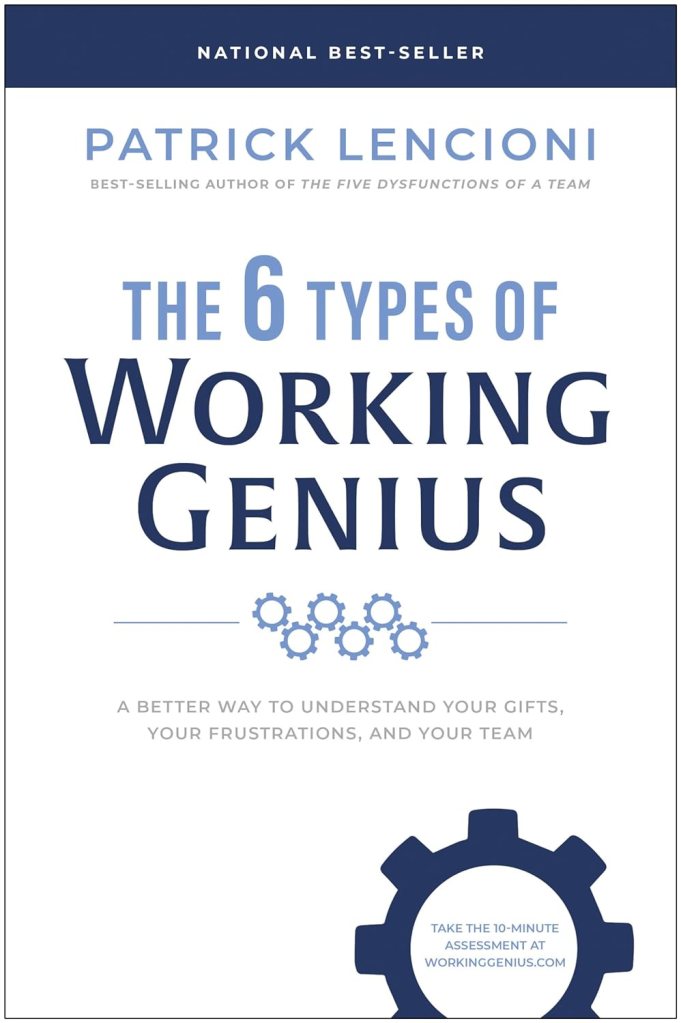
  1. The 6 Types of Working Geniuses. This is the number #1 book that changed my outlook on life last year when I was super discouraged and felt like I was swimming uphill with two swimsuits and concrete boots on (was that enough mixed metaphors?…maybe add a Sysphyian rock). Yes, it’s a business book, but sometimes those have the best crossover takeaways. This one helped me figure out how to work with families, students, tutors, and my own kids, because instead of being a personality book that’s more about you, it’s more about how a group works to get things done. Some people hate the “story” format, others love it. I was more in the former category but it wasn’t so bad I couldn’t get through it to get to the good stuff. It’s also a super quick listen on Audible if that’s more your thing. (If you read or listen to it, I’m dying to know what your geniuses are)

    2. Myers Briggs Cognitive Functions. This goes beyond your basic “extrovert/introvert/judging” dichotomy. If you’ve ever heard someone criticize Myers Briggs because they don’t want to be boxed in, or there’s no way there are only sixteen types of people in the world, “cognitive functions” is the key they’re missing. There are a million books on the topic, but I like this internet article, along with a little interactive chart that tells you what the various function stacks are. This helps on a more practical level with kids and learning styles. I notice my students/kids’ dominant functions pretty quickly and then can modify or customize the learning for them. 

    3. Gorilla Mindset. This book is definitely in the “Dude-Bro” category, but I’m including it here because he has more practical and tangible ways to have a growth mindset instead of the more esoteric theoretical stuff. I’ve used it to help multiple kids work through meltdowns and it’s especially helpful for the kids who are perfectionists and spiral. The ones who go from “I can’t do this math problem” to “What’s the point of life, I’m the worst/stupidest/dumbest kid ever” in a nanosecond. I don’t agree with everything he says, so don’t just hand it to a kid, without reading it first, but it has some useful tips. 

      I always feel leery talking about this kind of stuff in public, because it generates such strong opinions from people. So if you’re the type of person who likes things to be black and white, or finds this sort of thing super obnoxious, or thinks that business books are actually written by aliens that Elon Musk has hired to take over the world…then definitely just hit “skip”. I’m more of a “glean and use what you can” kind of thinker. 

      But of course I’d say that because I’m an ENFP.