From Maple Leaves to Northern Lights! Memorizing and Learning Canada

Every year, I try to put myself in the head of a middle schooler and figure out new ways to help them wrestle with geography and cartography. It’s no easy task to memorize drawing and labeling the whole world by heart. Some might even question the necessity (and sanity) of doing so (since let’s be honest, most kids are probably going to forget a lot of it anyway… and what are they going to use it for, answering a Jeopardy question at 40?), but I had to memorize and draw the world by heart as a young teenager, and not only did it make history and politics much easier to follow, it was also like an executive function super course. Taking a big project, breaking it down into chunks, and figuring out ways to remember everything is a huge skill that transfers over to so much of adulthood.

That said, there are certain “hacks” to help information stick in your brain…colors, novelty, music, pegging, mnemonics etc. I try to have my kids and students brainstorm with me, and so here’s this year’s fresh crop of new ideas. Homeschoolers these days have so many more creative tools at their fingertips than I did in the 90s. It’s not fair!

What we’ve come up with for helping to memorize Canada’s provinces and territories:

Big Alps Sing Many Quiet Old Nursery Poems Near Naptime to Young Northern Nomads.
British Columbia, Alberta, Saskatchewan, Manitoba, Quebec, Ontario, Newfoundland, Prince Edward Island, Yukon, Northwest Territories, and Nunavut.

Save, print, laminate, cut into cards, and keep around the table while you’re drawing and labeling. Try memorizing and chanting to jump rope, cups, clapping, hop scotch, tango dancing or…you get the idea.

So that helps with the visual working memory, but it doesn’t include the capitals. For that we need a good old fashioned sea shanty. Here’s a song with all of Canada’s provinces, territories and capitals, including Ottawa! (for some reason, kids seem to skip that one).

You can download that here:

It very intentionally matches the same order as the acrostic mnemonic, but be careful! The Canadian provinces and capitals might get stuck in your head.

As always, you can find my other Cartography resources here:

Challenge A Cartography workbook

Map drawing tutorials

Happy Homeschooling!

Reluctant Artists and a Printable Nature Journal

Whether you’re an avid Charlotte Mason homeschooler, a die-hard Classical mom, or a free-spirited unschooler… we all want our children to spend more time outside, soaking in God’s nature, and of course the holy grail would be if they actually drew/painted and wrote down what they observed.

If you’re reading this and are thinking, yeah? What’s the big deal? My kids already do that. Then this blog post is not for you. But if you’re down here in the valleys fighting the monsters of “I’m hot and this is boring,” and “can we be done yet?” or the dreaded siren call of electronics, then know you’re not alone.

So if you have kids with ADHD, or who dislike writing/drawing, or who act like they’re allergic to being outside, here are some things that may help (or at least maybe baby steps in the right direction).

1) Set clear expectations. “We’re going outside for 30 min” is better than the abstract, full Sound of Music, “The hills are alive with the sound of music” vibe where you picture you and your children picturesquely traipsing through meadows with butterflies, sketchbooks in hand, and pencils ready to go.

2) If you have a perfectionistic artist, switch to a pen and tell them it’s a magic pen where mistakes are not only allowed, but encouraged. They don’t need to draw and erase five thousand times with a pencil while they get more and more frustrated.

3) If you have a child with dysgraphia, have them treat the outdoors like a rough draft. The messy handwriting, random keywords, and stick figures are great! Let them come in and trace and type later when they’re ready. If they saw a bird they thought was cool, have them trace a simple generic bird outline from the internet, and then fill in the details and colors on their own.

4) If you have boys or kids who like competition, turn it into a game. “Can you find a leaf you’ve never seen before?”, “Person who finds the craziest bug wins”, “Silent game and see who can hear the most bird calls”.

5) And last but not least, give them the freedom to research and sketch something crazy. Yes, you want them to be inside, but sometimes kids just want to research man-eating crocodiles in Australia, or a cute, nearly extinct red panda bear, and that’s ok too. I think sometimes we forget that the goal is to fan the flame of intellectual curiosity, observation, and research, and that doesn’t always fit into our idyllic homeschooling ideals.

And if you’re one of those folks with a good printer and a speaking relationship with it, here’s a printable Nature Sketch Journal you can download for free:
1) Nature Journal w/Butterfly Cover
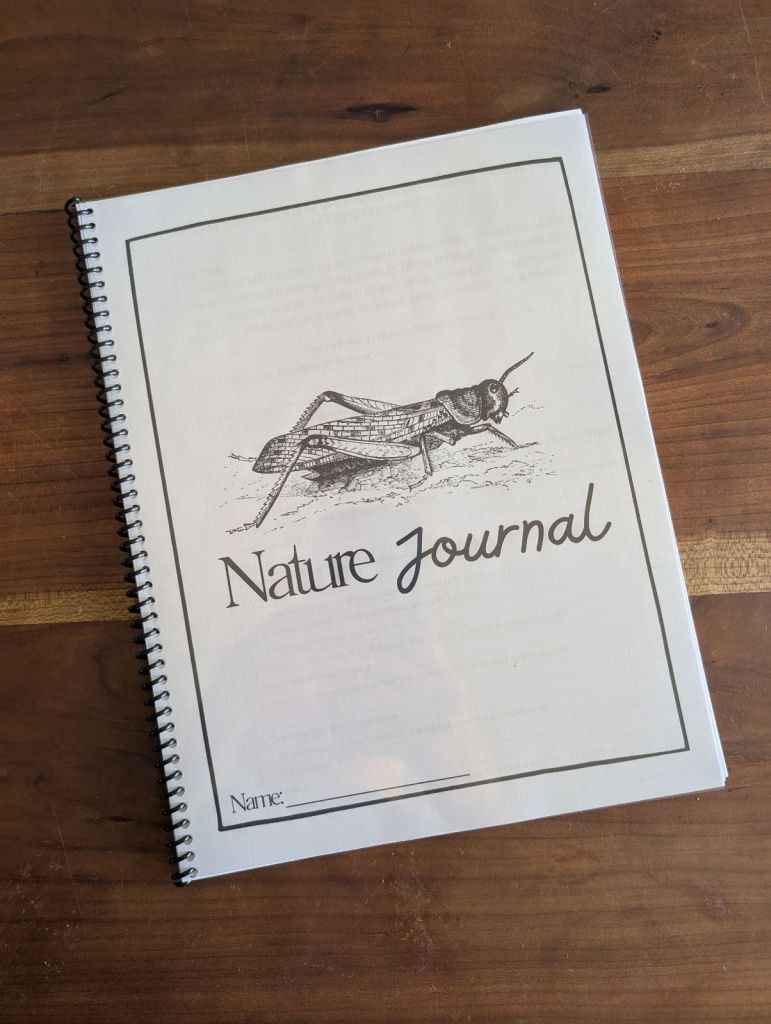
2) Nature Journal w/Grasshopper cover

It has space for both drawing and writing, and it’s formatted so your child can read their writing/notes, while their listeners can see their drawing.

If you need any other reluctant middle-school or Challenge A help (if you’re in Classical Conversations), you can find an ADHD friendly Latin workbook here. Or a traceable cartography workbook with drawing tutorials here. Or an anatomy workbook for kids who are strongly in the dialectic phase and like to argue and be opinionated here.

Meanwhile, I’m off to shoo my crew outside and pretend like we’re super chill about poison ivy and ticks! Ahem.

Blog Entry Anatomical Heart Project – Perler Style 

Yes, it’s every mother’s favorite type of project: Something that includes hundreds of tiny pieces. Perler beads. 

Somehow I have managed to avoid these little monsters for years. They fall into the same category as “Toddlers with Fruit” in my book i.e. the fun stage of life when your three-year-old asks for a banana and then promptly has a meltdown because you peeled it… or didn’t peel it, or they peeled it and saints preserve us it broke in half. Perler beads are similar in that they are prone to all kinds of catastrophe, someone bumps the table, a sibling jostles an elbow, or they don’t iron right, and holy Batman the drama and meltdowns ensue. The only difference is that Perler beads don’t contain important nutrients like potassium so at least you don’t have to feel guilty if you refuse to stock them in the house.  

It’s my own fault really. I was hoisted on my own petard. One of my children who shall remain nameless, was making future plans to be an electrician and I took the opportunity to mention, and encourage oh-so-kindly, that he ought to work on his fine motor skills if he wanted to go into a profession that is basically the art of harnessing magic traveling in various amounts of strengths (and speeds) in waves across various intricate mediums. Convince me I’m wrong.  

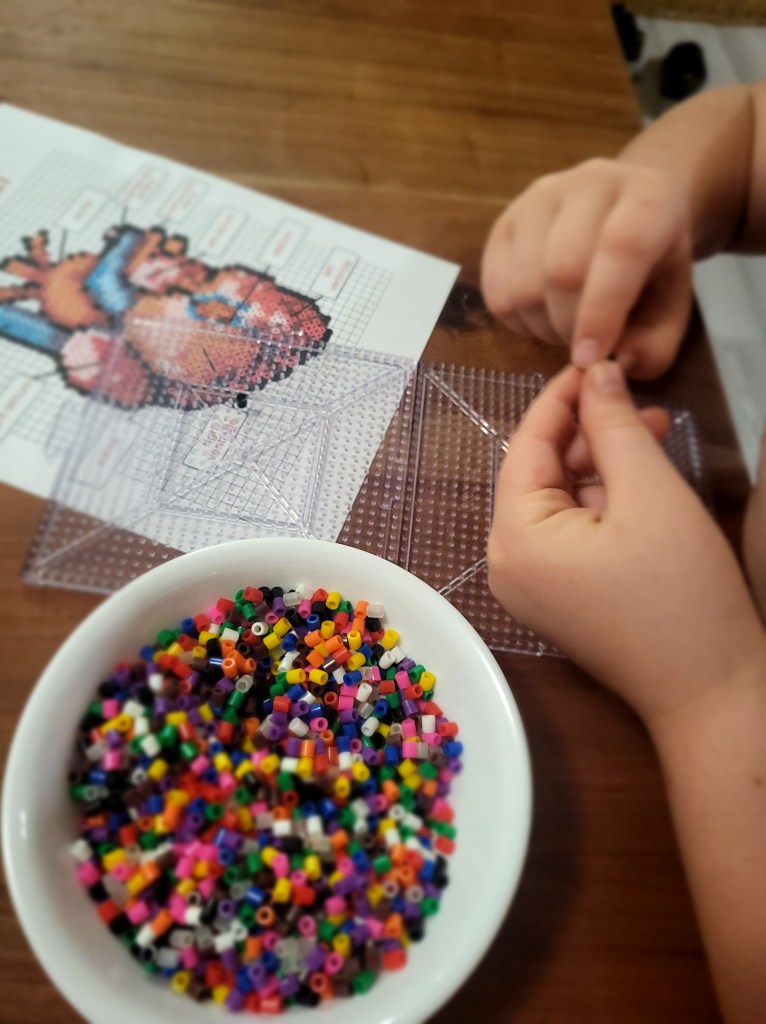
And that is how I found myself the proud owner of an 1100-piece bag of Perler beads. I mean we must work on said fine motor skills. And of course he remembers the activity that most helped his fine motor skills was the few times I allowed Perler beads into the house. And he would have no problem sitting still and focusing for long periods if only he had something like Perler beads to work on. The thing is, he’s right. They did really help his fine motor skills last time. And he did super focus. Bah. 

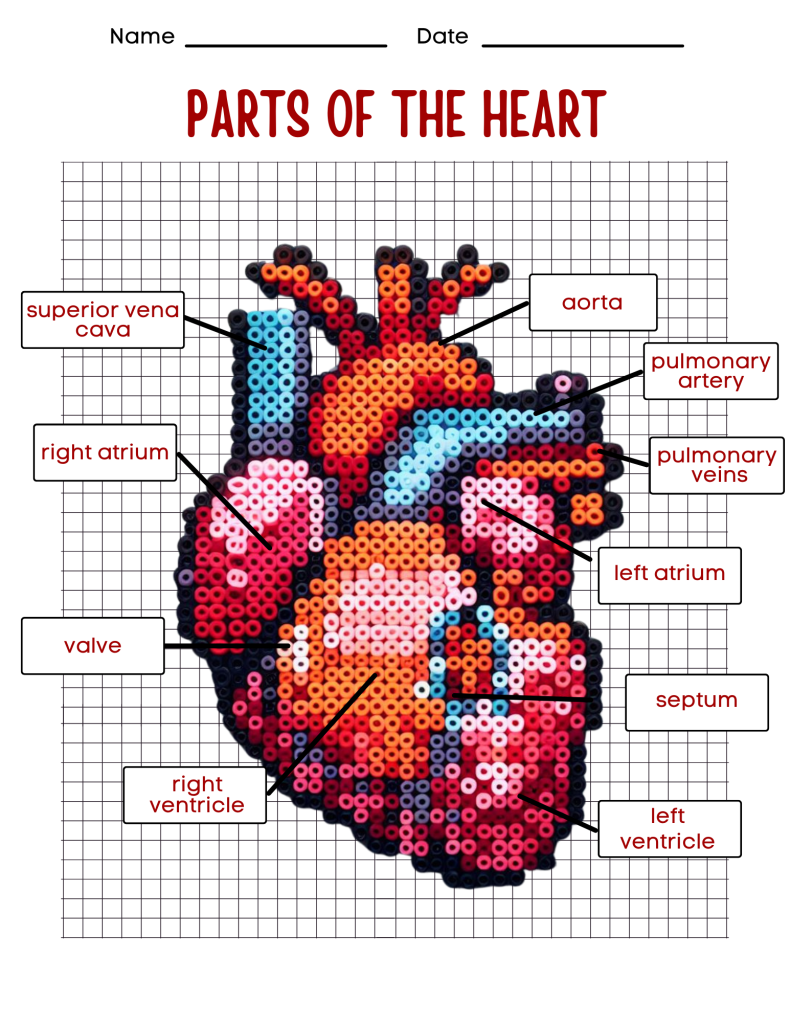
But in the end, we compromised. We’re wrapping up our unit study on human anatomy right now, so I figured if we’re going to do this, we’re going to gosh-darn do it right with a (mostly) accurate anatomical heart made entirely out of Perler beads. 

I gift you with the tutorial/pattern/worksheet below. You’re welcome…er… I’m sorry. Pass on my apologies to your vacuum cleaner. 

Shakespeare- Taming of the Shrew Coloring Pages

The struggle has been real. I have the best Challenge 1 class (9th grade), but except for a few kids, they just aren’t really feeling Shakespeare this semester. I’ve brought in costumes, instruments, treats, and even a Shakespearean insult generator. Granted, they have been good sports, but combine awkward English (that makes Yoda sound coherent), old vocabulary, and some super sketchy scenes and I feel like I’m the only one laughing and enjoying myself.

Most weeks we popcorn read, or draw characters out of a hat, so imagine a strapping 15-year-old boy donning a flower tiara as the charming Bianca, and other less-than-impressed teenagers trying to flip hats, guitars and golden robes back and forth as they attempt to keep everyone straight. We’re all trying to juggle characters playing multiple parts and remember who is impersonating who in Taming of The Shrew and it isn’t pretty. Then you have their college-educated tutor who really understands only half of what she’s reading herself, and the half she does understand…she’s not sure if she should explain in plain English.

Really it’s fine. We’re all fine…learning so much you unmuzzled sheep-biting cod-piece.

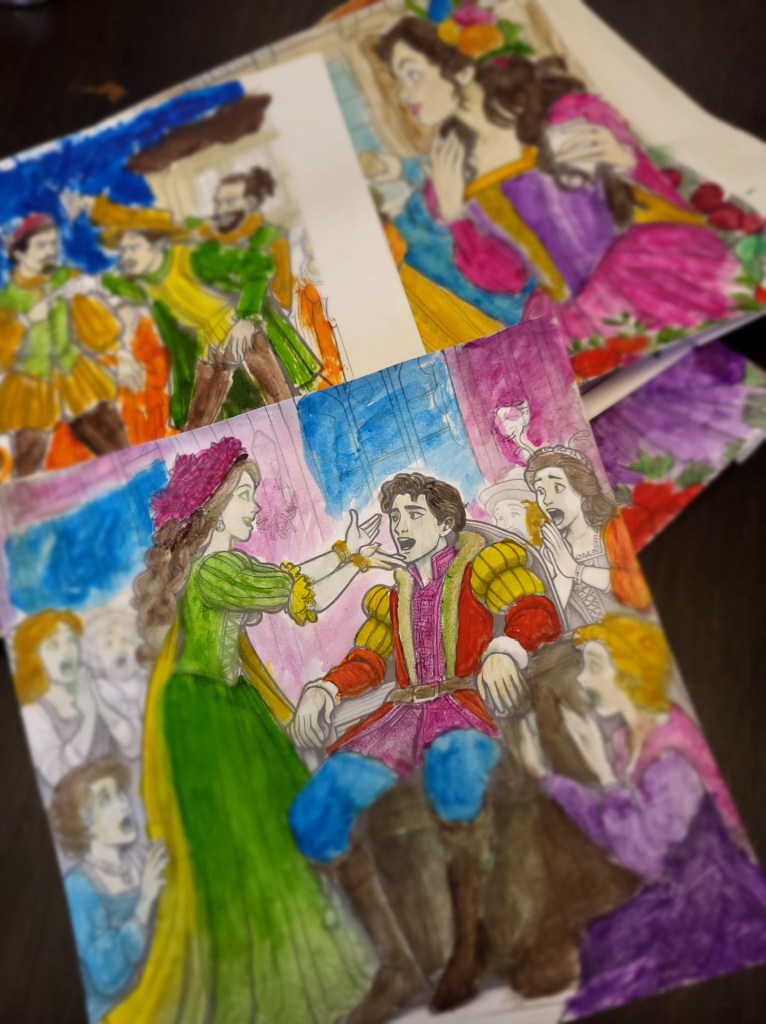
Last night as I was scrolling through Pinterest, hoping inspiration would hit, I had a truly Gen Z epiphany. I couldn’t find what I was looking for, so I turned to Bing Image Generator and ai’d my way to custom “Taming of the Shrew Coloring Pages”. We painted them in class today as we read aloud and I have to say it was a winning combo. The fact that the coloring pages are ridiculous and sport extra arms and legs only makes them more awesome.

Not that there are a ton of people in the world looking for Taming Of The Shrew Coloring pages, but if you are, you’re welcome.