Teaching kids to be thinkers: Fallacy Flipbook

The world right now feels a bit like a flamingo trying to put on pantyhose in the dark. Lots of staggering involved. Maybe it’s because I have one kid going through the Fallacy Detective right now, or maybe we’re just in a new season of family dinners where varying opinions, debates, and conversations are flying on a more “oh hey look my kids are actually mini adults now” level and not the old days of “Please put your underwear back on, and no you cannot stick beans up your nose.”

So all that to say, we’re on a logical fallacy kick around here. We find them in movies and ads, we catch each other doing them and we find them in spades on the internet and news. Whether your kids are homeschooled, private schooled, public schooled, or meet under a waterfall in some Waldorf-inspired space, I think it’s safe to say raising discerning thinkers is a high priority for all of us. Equipping them with the tools to think, discern, and pursue truth is like a broken record on the to-do list.

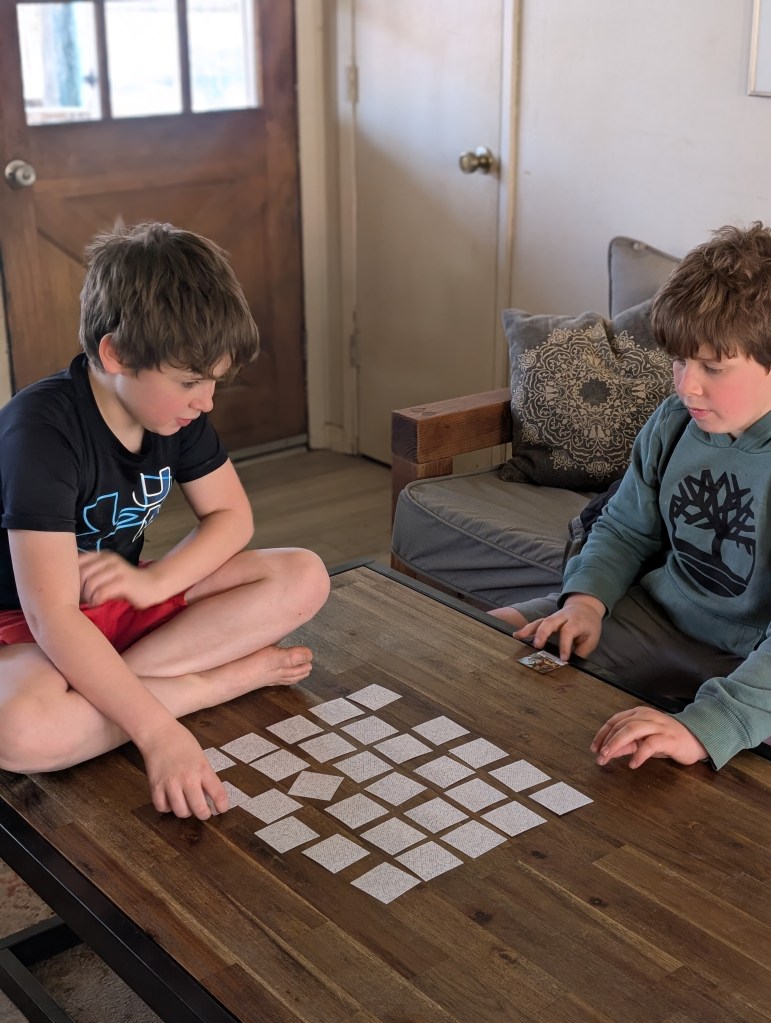
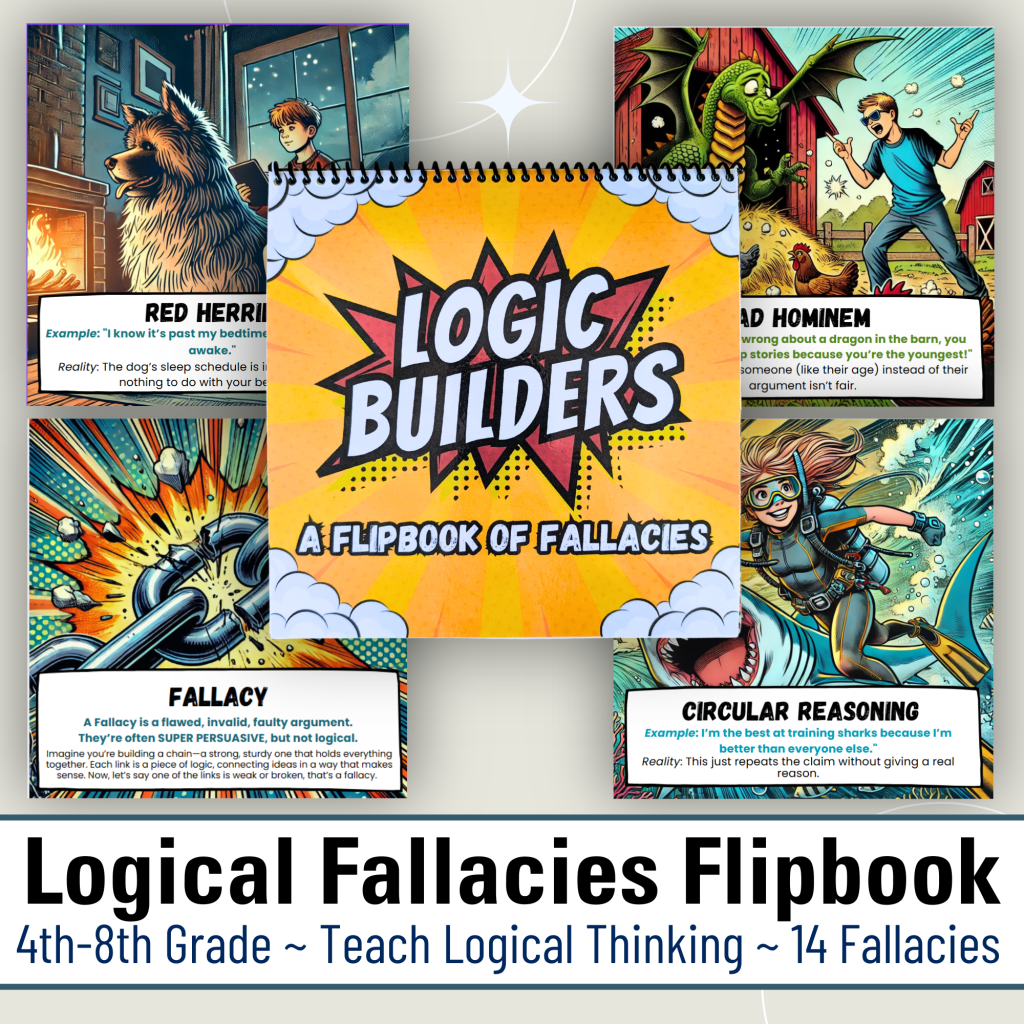
Not that I have anything remotely close to the answer, since persuasive rhetoric is supercharged these days, and we’re just as susceptible as the next person. So this is not a promise for “life-changing” results, but we’ve been enjoying these cards and matching game which you can download here. It’s led to lots of great conversations and I like that the youngest is catching up quicker than his older siblings did.

Or if you feel like supporting a small business, (mine!) you can download the full flipbook for a few dollars here. I made them to be neuro friendly and brain “sticky” in all the ADHD/Dyslexia ways. Even my older kids are picking it up and reading through them….which….let’s just say I’ll take that as a win!
Types of Dyslexia and a Freebie Spelling Poster

Why oh why, does Spelling (it looks more doomful with a capital letter) feel like an unsolvable riddle sometimes? The word “dyslexia” has to be one of the most discouraging entries in the dictionary. Besides being just an ugly word to look at, the poor word conjures up visions of kids staring at pages like they’re written in ancient Sumerian with a lone tear trickling down their cheek. Meanwhile, we parents are over here googling “reading therapy” at 2 a.m. and wondering if a fish oil supplement will help. To make matters worse, there isn’t just one type of dyslexia, and it isn’t just “words wiggling” or letter reversals. It’s a whole Easter basket of struggles in (sometimes) hilarious ways. Here are some of the types we struggle with around here:

1. Phonological Dyslexia: The Sound Scrambler

This is the classic, most well-known type. Kids with phonological dyslexia struggle to connect sounds to letters. They can hear the difference between “bat” and “but,” but when it comes time to spell them, it’s like trying to remember the 400-digit Wi-Fi password at a hotel

2. Orthographic (surface) Dyslexia: The Rule Breaker’s Nightmare

English is a mostly phonetic language, but not entirely. (Looking at you, “colonel.”) People with surface dyslexia can sound out words just fine—until they hit an irregular word like “yacht.” Then their brains short-circuit. When they can’t rely on phonics, they get frustrated. If you’ve got a kid writing a word five times in a row… and still spelling it differently each time, you might be dealing with this one.

3. Rapid Naming Deficit: The Brain’s Slow Typist

Ever tried to recall someone’s name and your brain just gives you elevator music? That’s what happens to kids with a rapid naming deficit all the time. Their brains take a beat too long to retrieve letters and sounds, making reading feel like wading through molasses in January.

I’m not sure what the answer is. We’ve had great success with vision exercises, right-brained strategies, and a heavy emphasis on the science of reading/Orton-Gillingham (so there are as few exceptions as possible). I’m currently neck deep (mid-year deep?) in writing my own spelling curriculum that combines all my favorite things and cuts out the things I think are dumb. But I have to admit that was rather ambitious and cocky. Turns out what works for one kid, doesn’t work for the other kid, and despite all my attempts to make it fun and manageable, I still have kids hitting brick walls.

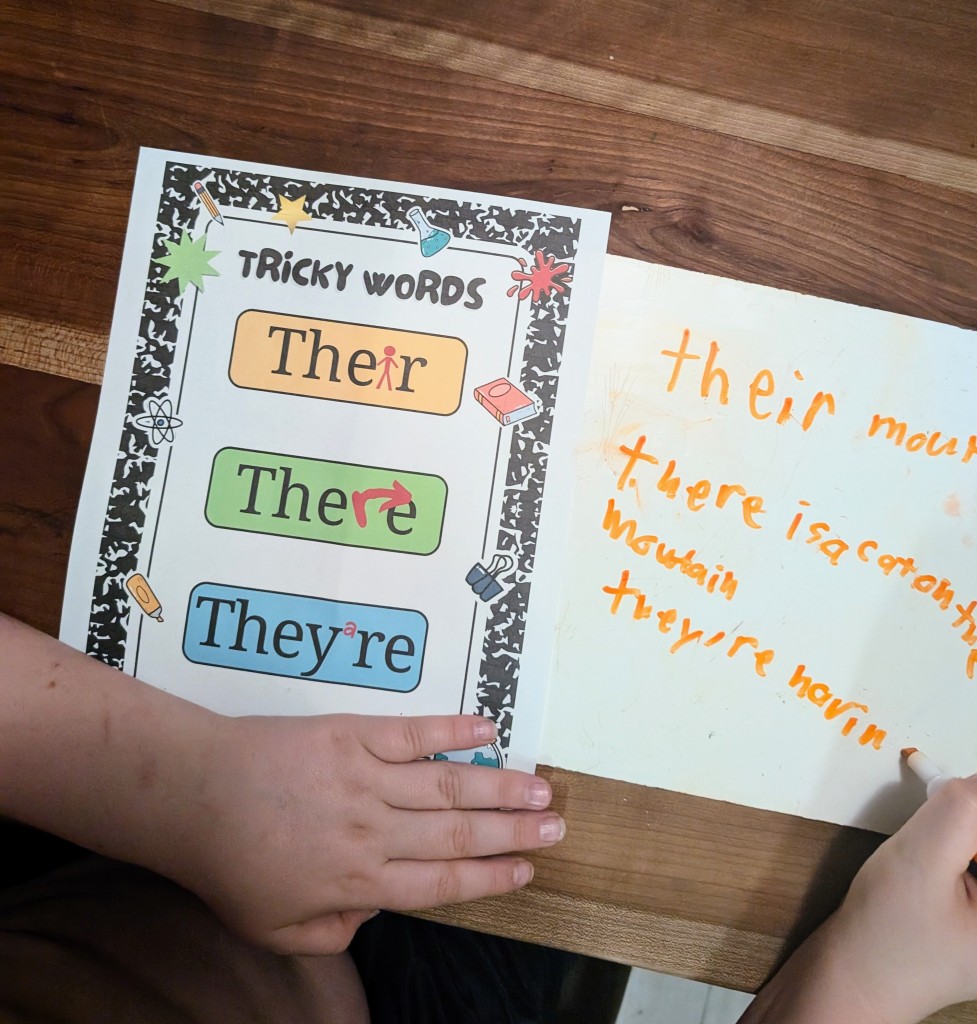
But we are making progress! It helps to put all the spelling rules to music. I have hope that we will figure it out, but in the meantime, if you have a child mixing up “their, there and they’re”, here’s a little visual memory hook to help. You can download it here.

This image has an empty alt attribute; its file name is pxl_20250228_035153719.jpg

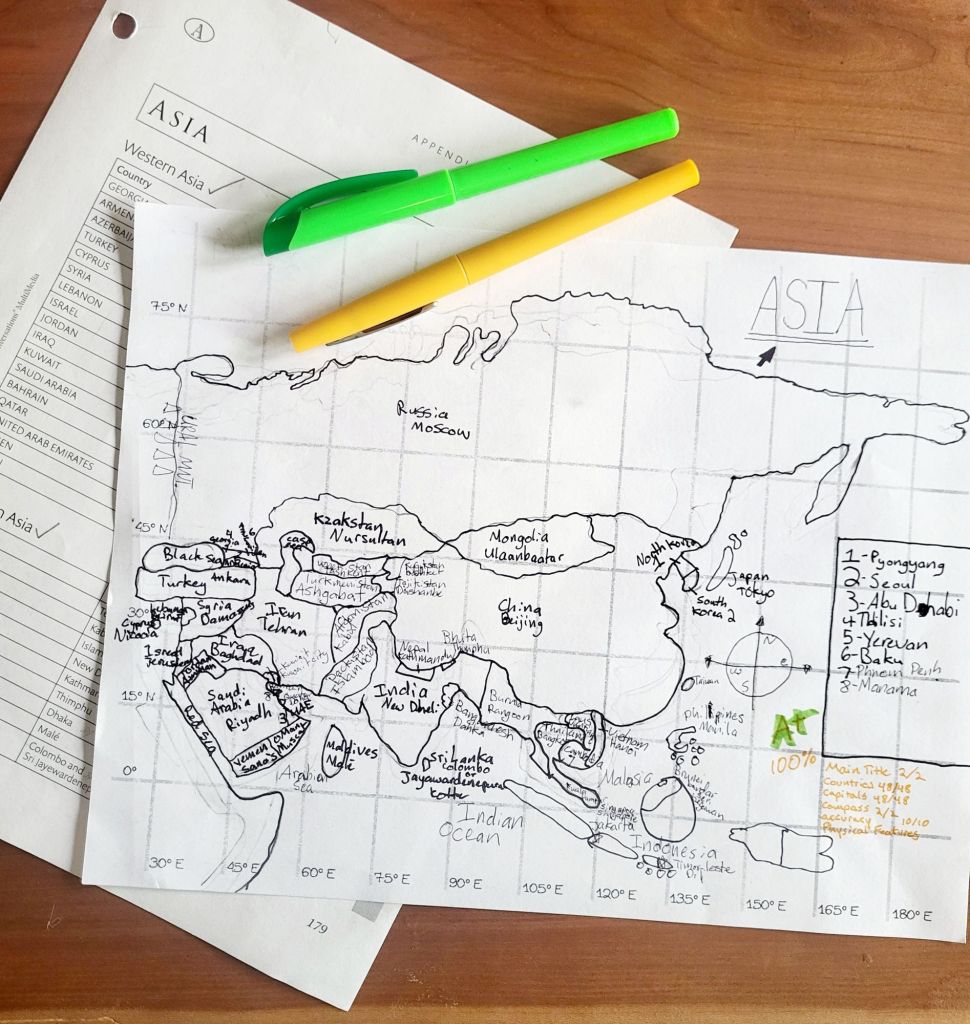
Thoughts About Geography, Cartography, Therapy and Homeschooling

“Let me count the ways I love thee…”

Geography is one of those lost arts that is so smothered in a sea of fake/unhelpful/wannabe books, games, workbooks, and curriculum that sometimes you can’t see the forest for the trees.  It’s one of those instantly marketable items. Slap a map and the word “Geography” or “Educational” on the front of it, and we parents are quick to snap them up off of Amazon, library clean-out sales, hand-me-downs, or the thrift store like they’re desperate promises to our future selves (I mean, surely I’m not the only one with visions of perfectly curated themed bookshelves and travel themed unit studies). And don’t even get me started on the geography-themed games and flashcards…

But all that geography stuff usually is so colorful and well-designed, that you don’t realize it’s kind of shallow and unengaging (and oftentimes downright full of errors). Consequently, the problem isn’t that there aren’t tons of options for Geography, but that it’s a struggle to find stuff you’ll actually use.

And Geography is one of those subjects that packs so much bang for its buck. Not only is it math, history, art, and science all in one parcel, but it’s also visual processing, concrete/abstract processing, spatial processing, executive functioning… all the things. It’s basically a custom-designed torpedo pod of academics and therapy all tied up into one perfect package.  The only thing that might beat it at all those things is the violin, but that’s a post for another day. 

The problem is if you dive in and dig deep and engage with it…drawing and pronouncing, and wrestling with longitude and latitude, various sizes and projections, and whatnot, it’s hard. Sometimes extraordinarily hard, depending on how your kid’s brain is wired (or your brain), but I’ve seen profoundly dyslexic eyes thrive, and dysgraphia fingers map the whole world from heart (I can’t read it, but still…). Not going to lie, I’ve also seen kids cry and I’m not above bribes (and paint…and music…but mostly lots of paint). But seeing their minds grow and the connections made, I feel like it’s worth it to find your way through it. 

And I don’t just say that because I wrote a cartography workbook which you can find here (insert cheesy infomercial music).  Or made a bunch of fun, silly videos to help memorize and draw the world by heart which you can watch here (feel free to judge me, but don’t knock it til you try it…it works). 

In the end, it doesn’t matter, pull out the colorful Costco Walmart Geograph specials, and just have fun with it…but maybe Google fact-check the stuff that doesn’t pass the sniff test. Really, this is an ode to how much I love geography. 😍

3 Things Every Homeschooling Mom Needs

  1. A good printer that doesn’t cost an arm and a leg in ink. 
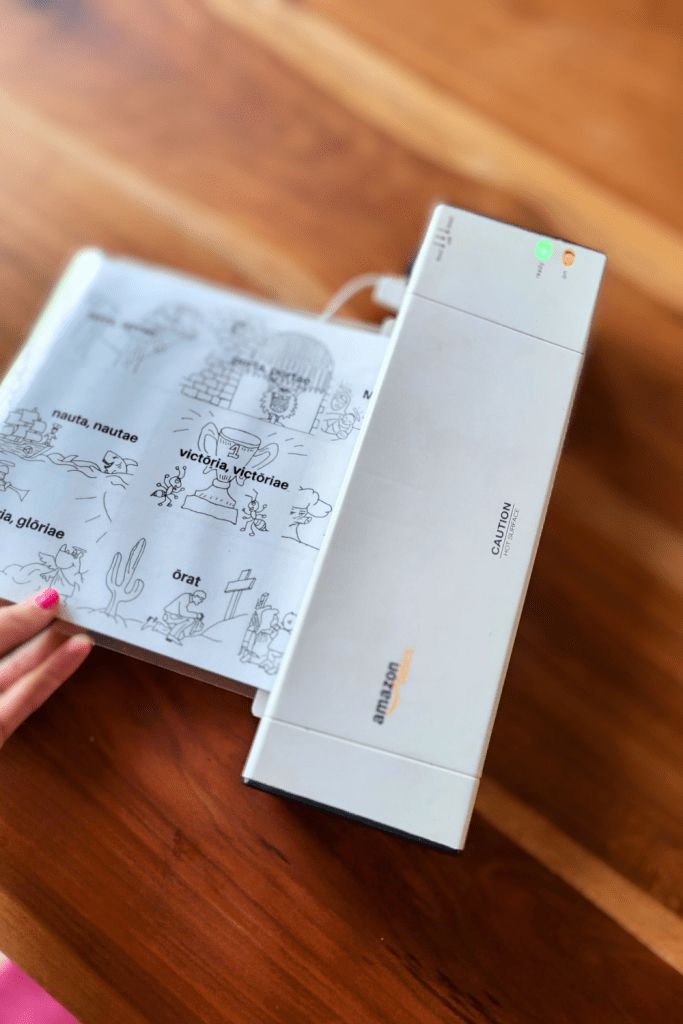
  2. A laminator that won’t “eat” your beautiful school stuff. 
  3. A shoe organizer repurposed as a flashcard holder so all the kids can find what they need. 

No lie, I think I love my printer more than I like some of my friends (I kid, I kid), but sometimes I feel like I need to put “Marked Safe From My Laminator”. That thing is going to be the death of me. I love it dearly but I never know when it’s going to mess up and destroy something…usually something I printed in color at Office Depot and drove over an hour to pick up. So if anyone has any suggestions for a laminator they love, please tell me. I need to break up with mine (It’s me, not you dear laminator, I promise…ahem). The shoe organizer was a brilliant stroke of genius (aka, I saw it on Pinterest). I probably need to get a new one, because this one is looking a little like it’s had a few too many late nights and days in the sun…or rather moved multiple times and been handled by dozens of children. But it’s lasted years and it’s one thing in our homeschool life we use constantly. I probably need two at this point.

What mom homeschooling things am I missing?

Homeschool laminator Classical Conversations Latin Henle