From Maple Leaves to Northern Lights! Memorizing and Learning Canada

Every year, I try to put myself in the head of a middle schooler and figure out new ways to help them wrestle with geography and cartography. It’s no easy task to memorize drawing and labeling the whole world by heart. Some might even question the necessity (and sanity) of doing so (since let’s be honest, most kids are probably going to forget a lot of it anyway… and what are they going to use it for, answering a Jeopardy question at 40?), but I had to memorize and draw the world by heart as a young teenager, and not only did it make history and politics much easier to follow, it was also like an executive function super course. Taking a big project, breaking it down into chunks, and figuring out ways to remember everything is a huge skill that transfers over to so much of adulthood.

That said, there are certain “hacks” to help information stick in your brain…colors, novelty, music, pegging, mnemonics etc. I try to have my kids and students brainstorm with me, and so here’s this year’s fresh crop of new ideas. Homeschoolers these days have so many more creative tools at their fingertips than I did in the 90s. It’s not fair!

What we’ve come up with for helping to memorize Canada’s provinces and territories:

Big Alps Sing Many Quiet Old Nursery Poems Near Naptime to Young Northern Nomads.
British Columbia, Alberta, Saskatchewan, Manitoba, Quebec, Ontario, Newfoundland, Prince Edward Island, Yukon, Northwest Territories, and Nunavut.

Save, print, laminate, cut into cards, and keep around the table while you’re drawing and labeling. Try memorizing and chanting to jump rope, cups, clapping, hop scotch, tango dancing or…you get the idea.

So that helps with the visual working memory, but it doesn’t include the capitals. For that we need a good old fashioned sea shanty. Here’s a song with all of Canada’s provinces, territories and capitals, including Ottawa! (for some reason, kids seem to skip that one).

You can download that here:

It very intentionally matches the same order as the acrostic mnemonic, but be careful! The Canadian provinces and capitals might get stuck in your head.

As always, you can find my other Cartography resources here:

Challenge A Cartography workbook

Map drawing tutorials

Happy Homeschooling!

Anatomy Curriculum & Giving the “Birds and the Bees” Talk (Science Freebie)

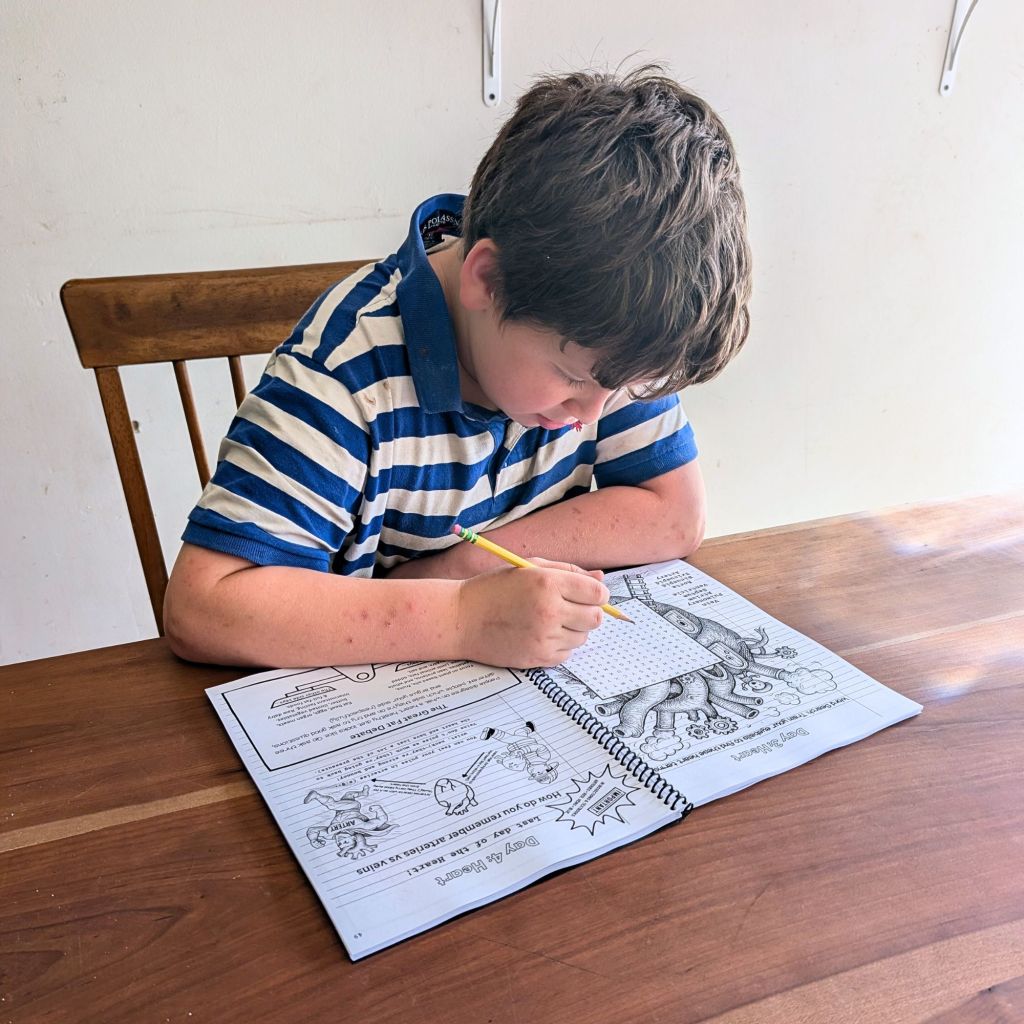
I should have done this a long time ago. I wrote a whole Anatomy Workbook/Curriculum! Between four kids who love science, a mom who is a nurse and loves human anatomy, and my years as a Challenge A Director, I’ve spent the last several months compiling all of my favorite experiments, dialectic questions, simpler drawings, and all the crazy memory hacks my mom used when I was little to help us memorize everything. It was one of those projects where I felt like I could have kept writing it forever, adding new interesting research and information I dug up, but I also wanted to make it doable. An independent, open-and-go curriculum with an easy answer key that wasn’t online and was screen-free. I also tried to tap into middle schoolers’ natural desire to form opinions and argue with everyone around them. Ahem.

You can find the printable digital version here.
Or…
You can find the printed and mailed-to-you version here.

And now, on to the thing that sparked this whole adventure. I think THE TALK is a universally dreaded conversation to have with your kids, and it always seems to be in capital letters in one’s head. And the worst part (at least in our family) is that when you finally muster up the courage to have the conversation, you forget that your kid has an auditory processing problem, and you make it so low-key and chill that they promptly forget the whole thing, leaving you to experience Groundhog Day. Good times. The internet is chock-full of all kinds of books, instructional material, and helpful advice, but it can be daunting and overwhelming, and thus we disassociate until another day and hope we don’t wait too long, or heaven forbid, give it too soon (where are my pearls to clutch).

So don’t take this as advice or a strong opinion, but if you’re looking for a plain, factual lesson, I’ve got you covered. For those who have visual learner kids, but don’t want something super graphic and are looking for a more science-friendly approach, here’s the Reproductive System Lesson from the workbook. A freebie science printable, as they say. You can hand it over, or do it alongside them, or edit it, or use it as a starting point to build with more information as they get older and more mature (or perhaps less mature in the case of middle schoolers). Enjoy!

Or you know, you can always go the super expensive route and buy a homestead and have animals, and then the reproductive education (mostly) takes care of itself!

My Summer Math Hack

We only have three weeks of school left, the green baby leaves have finally outnumbered the gray tones, and I’m sitting in my living room wallowing in jello-like humidity (which I know is only a whisper of what’s to come, but in comparison, it’s for sure a hearkening). Clearly, Summer is almost here.

I’ve been mulling over what we want to do this summer: Hopefully, lots of gardening, river floating, and playing football or basketball in the morning after we’ve slept in, eaten homemade crepes, and read books together (one can dream, right?). But when I was thinking back to what has worked in previous summers I realized there is a clear winner that has threaded its way through all of our summers since my oldest was a wee lad.

Xtra Math

Yeah, I know it’s kind of old school at this point, but I swear it really does painlessly teach fast arithmetic facts. I’ve always called it their “summer vitamin” and no one has really balked at it much, although that may be because it takes less than 10 minutes and has a clear beginning and end.

I don’t like to use it during the school year because Saxon takes so long that even ten more minutes feels like a duel-worthy insult, but I like to pull Xtra Math out in the summer just to keep everyone’s minds sharp.

And if we don’t get to it because we’re camping or picking ticks off, well then…that’s ok too.

Blog Entry Anatomical Heart Project – Perler Style 

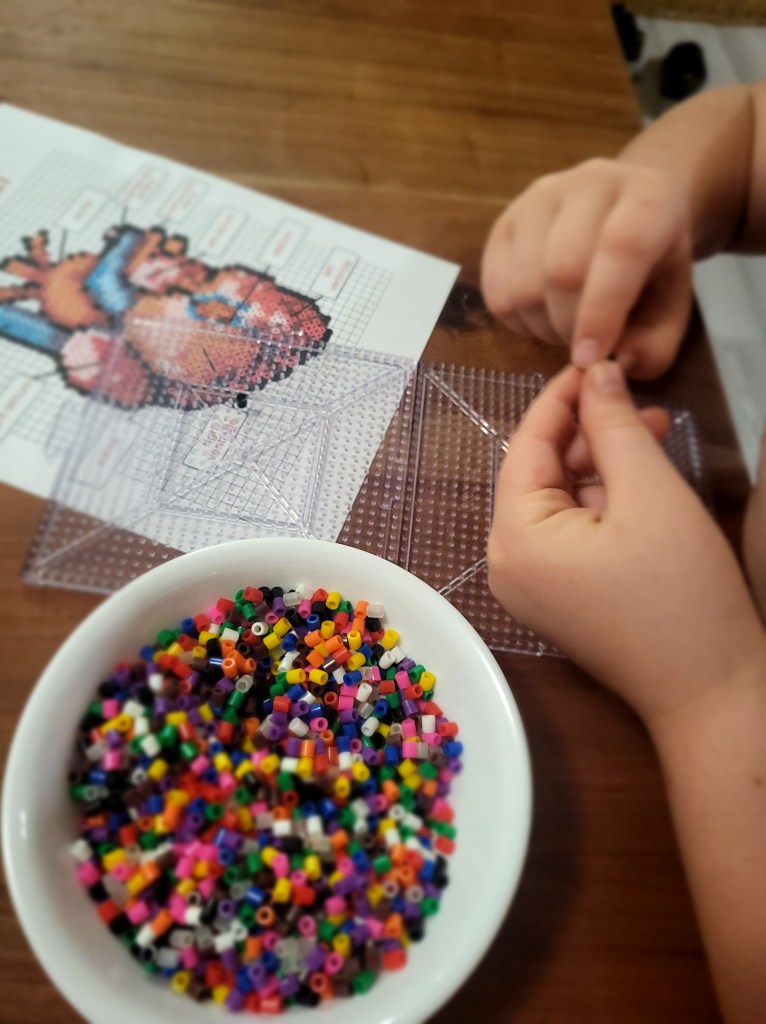
Yes, it’s every mother’s favorite type of project: Something that includes hundreds of tiny pieces. Perler beads. 

Somehow I have managed to avoid these little monsters for years. They fall into the same category as “Toddlers with Fruit” in my book i.e. the fun stage of life when your three-year-old asks for a banana and then promptly has a meltdown because you peeled it… or didn’t peel it, or they peeled it and saints preserve us it broke in half. Perler beads are similar in that they are prone to all kinds of catastrophe, someone bumps the table, a sibling jostles an elbow, or they don’t iron right, and holy Batman the drama and meltdowns ensue. The only difference is that Perler beads don’t contain important nutrients like potassium so at least you don’t have to feel guilty if you refuse to stock them in the house.  

It’s my own fault really. I was hoisted on my own petard. One of my children who shall remain nameless, was making future plans to be an electrician and I took the opportunity to mention, and encourage oh-so-kindly, that he ought to work on his fine motor skills if he wanted to go into a profession that is basically the art of harnessing magic traveling in various amounts of strengths (and speeds) in waves across various intricate mediums. Convince me I’m wrong.  

And that is how I found myself the proud owner of an 1100-piece bag of Perler beads. I mean we must work on said fine motor skills. And of course he remembers the activity that most helped his fine motor skills was the few times I allowed Perler beads into the house. And he would have no problem sitting still and focusing for long periods if only he had something like Perler beads to work on. The thing is, he’s right. They did really help his fine motor skills last time. And he did super focus. Bah. 

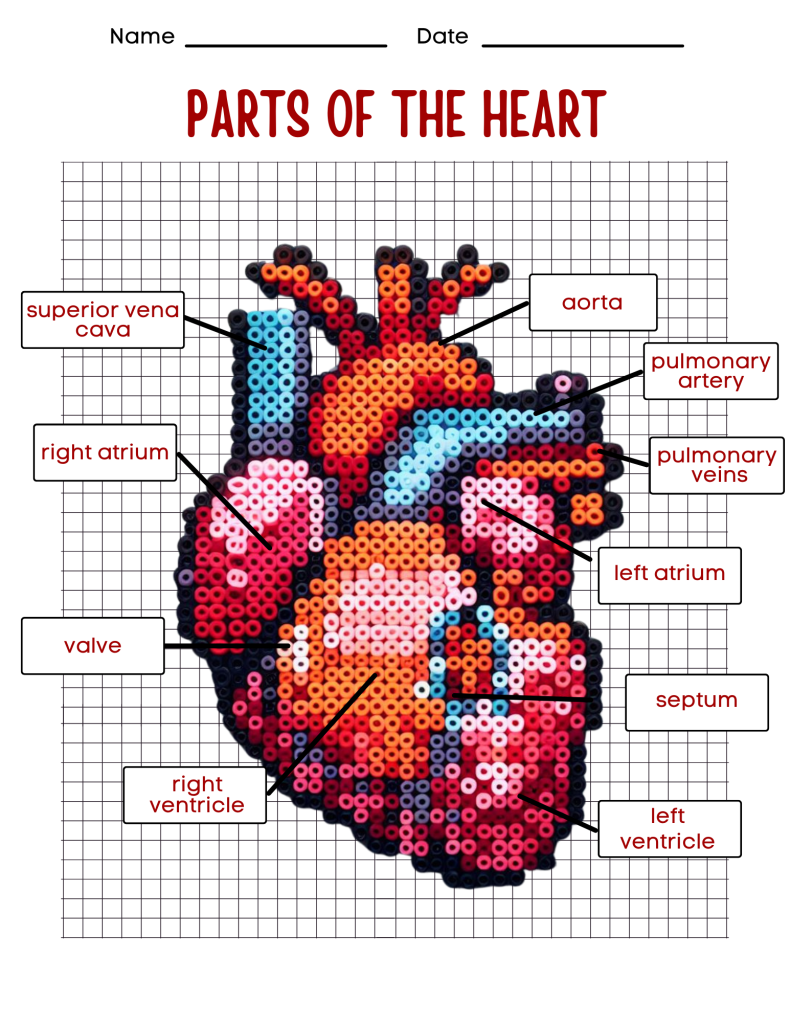
But in the end, we compromised. We’re wrapping up our unit study on human anatomy right now, so I figured if we’re going to do this, we’re going to gosh-darn do it right with a (mostly) accurate anatomical heart made entirely out of Perler beads. 

I gift you with the tutorial/pattern/worksheet below. You’re welcome…er… I’m sorry. Pass on my apologies to your vacuum cleaner. 

How To Have Fun And Learn Things On Field Trips (Bonus: Everyone Survives)

I think I’ve finally hacked it….maybe.

Taking uninterested children to museums and field trips is BRUTAL. On one side you tell yourself that your children need to be educated and cultured and have their horizons expanded, on the other side you have the students/children themselves who are loudly protesting how much they hate said field trip. And then you have all the older responsible folk who are all “when I was a kid, we didn’t complain about…”.

And while you’re trying to internally juggle all the things, you’re also trying to pretend that you have nothing else in the world to do than make everyone happy. You’re not also wondering how you’re going to grade papers, get dinner on, feed the dog, schedule the orthodontist appt etc. I mean, I don’t know about you, but I live for bridging the gap between cranky docents who think “children should be seen but not heard” and said children who are convinced the world is devoid of food and fun.

Now that I think about it, I’m not being sarcastic…that’s literally what I live for. I think I may genuinely enjoy bridging that gap between the old and the new.

But I digress.

I happen to so privileged as to live within bike-riding distance of where the Little House On the Prairie series was written. That’s right. The real Laura Ingalls Wilder herself, wrote the famous books not a stone’s throw away from my house. Consequently, my children have been once…or twice…or several…ok many times to the original homestead tours and museum. So when our CC group had a field trip there, I knew I was going to walk that fun tightrope between the out loud “of course we’re going!” and the intense hushed “yes we are going and you are going to be polite and listen to the tour guide and say “yes ma’am and thank you”.

As I was agonizingly doing math with the youngest beforehand, in an attempt to get school done “early”, I realized I was going to need a backup plan. Having been before, I was mentally imagining a bunch of elementary-aged boys (and girls) trying to squeeze into the tiny 120-year-old kitchen filled with priceless artifacts. AND they were successfully supposed to not move or touch anything. Lord have mercy. So I came up with a “scavenger hunt”.

Now granted, I know this is harder to do if you’re traveling and don’t know what you’re getting into, but I think it’s really a fantastic plan. Kids like goals. Kids like tangible things. Sometimes their brains are too underdeveloped to match the grammar with the rhetoric, so they need a bridge. The bridge in this case was an orange wet-erase marker and a laminated sheet of notebook paper. I scribbled down 15 things for them to find and answer, and I evenly divided the tasks between the exhibits and the museum. The reward was a stick of “Penny candy” that now costs 40 cents. Ho hum. Economics lesson aside, I would happily pay 40 cents per kid in order to not get permanently banned from a museum. Of course, the plan did backfire on me when the kids were SO EXCITED to see Pa’s fiddle and to see where Laura lost the money for her homestead, that they went in like a drove of invasive grasshoppers, and promptly got their butts set down by an elderly docent. By the time I sauntered in (a few moments behind them), she was already wrapping up the “don’t make noise, don’t touch anything, don’t breathe on anything” lecture and was ready to launch into the “how to be a responsible chaperone lecture.” What she didn’t know, was that I am happy to take one for the team, in fact, I’d be happy to have her come lecture my children every morning, but she didn’t seem interested in that. Shocking.

After the field trip was over, my kids said it was the best field field trip ever. So. much. fun.

The key really was the “scavenger hunt” (and maybe the presence of their friends, but who’s counting). Everyone needs a job or a mission, and I totally get it! When I was in Paris, I had a mental checklist of everything I wanted to see, and learn, and understand. Why would kids be any different? They just need a little abstract hand-holding.

I’m going to start doing this every time I find myself chaperoning a field trip where I know I’m going to be in over my head. However next time I’m going to have a chat with the Gift Shop Lady first, and I’m also not going to forget all my scavenger hunt stuff on the table. I’m wondering, should I go back and get my pens and paper? Cut my losses? Save face? or chalk it up to a good laugh?

Also, if you ever come to visit, I will happily show you where Laura and Almanzo’s secret cold spring is, and tell you all the “exclusive conspiracy theory” stories.

Donuts and Crystals: An Economics Lesson for Highschoolers

I am loving this school year so much. 9th graders are so much easier than 7th graders (although full confession, I feel like middle school is probably my calling in life). Middle schoolers are like the toddlers of the teenage years. They’re so cute, but kind of a lot.

However… (and that’s a big however). I don’t know if it’s post-covid, or a Gen Z thing or what, but I guarantee you your average high schooler has the ability to break any object lesson or activity that has worked for decades. There is nothing Gen X or Millenial teachers and parents can come up with that Gen Z can’t hack in a nanosecond.

Case in point: We did an “Inflation Game” today with very specific instructions. I was supposed to use beans and candy, but beans are boring and candy is for kids, so I took some floral rock-crystal-things I had and a cheap bag of hostess donuts (don’t judge). I handed out 5 crystals to each student and then offered to “sell” a donut for 10 crystals. This is supposed to be unsuccessful. According to my instructions no one is supposed to be able to buy a donut, thus proving that when money supply is low, inflation is low. You can imagine how well that went.

When I was prepping this activity a few days ago, I dryly predicted to Jim that it would take less than a second for two kids to combine their “money” and buy a donut since a half donut is better than none. I was correct. What I didn’t predict was that kids would start trading their snacks with each other for crystals, thus creating a bartering system outside of my controlled system (I feel like there’s a lesson there).

But it didn’t stop there. For the second part of the activity, I was instructed to give each student several handfuls of “money” (without counting to see who got more or less) and then start an auction for the donuts. As expected (and carefully explained in the directions), the extra money supply drove up inflation. What I didn’t expect is that monopolies quickly formed and two kids were in danger of getting absolutely every single one of the donuts before anyone else got a single one. So the rest of the class banded together and blocked them.

Strong feelings and opinions flew back and forth. At one point they discussed mobbing me and just taking the bag of donuts. I felt the weight of a thousand dictators weighing on my soul. It was dicey for a few moments.

All that to say, I think we learned more about economics in fifteen minutes than we have from any book. And if you try this…don’t say I didn’t warn you.

5 Ways I Got My Reluctant Readers to Read Better

Some of these are not new ideas, but they work. Reading has not come easy for any of my children…not one. And while some of them are more bookwormish than others, here are some things that drastically improved reading around here:

  1. Set a timer and have them pick a new reading nook from a handful of unusual places…in trees, under couches, on mom’s bed piled with a hundred pillows. My kid’s favorite place is on a random camping chair in the middle of a field. They fight over it. Don’t ask me why.
  2. Watch a summary/cartoon/synopsis first on YouTube, or watch the movie (if there is one). I know this is super horrifying and feels backward, but for whatever reason I swear it works. Especially if they’re trying to read something far above their comfort level (like Shakespeare or an older book). It’s like their brain is free to actually absorb and enjoy the book if they aren’t completely confused trying to keep characters and milieu straight.
  3. Let them read super stupid books. Bad Guys was a great gateway drug. It made them feel like they were reading a real book. Diary of a Wimpy Kid. Dog Man…and Big Nate are all things I internally groan over, but they got the job done. Reading confidence progresses way faster.
  4. Cleaned up our diet. Every time we cut out processed foods and eat super fresh nutrient-dense food, they jumped reading levels. It’s so obnoxious. I wish it didn’t work. I can never seem to maintain healthy eating for long stretches (especially because I love the social bonding that happens over food), but it’s always worth it when I do.
  5. Offer to do their dishes or chores but only if they read aloud to you (or read quietly to themselves too…I’m not too picky). My mom used to employ this trick for all sorts of things…mostly music practicing. I won’t say how old I was when it finally dawned on me what she was doing. Ha.

There are of course lots of things that go into building solid confident digesters-of-written-language, and this list doesn’t even touch on the struggles some kids might have to overcome, but these are all little things that helped push the rock up the hill.

The Evil Charts & Worksheets 

This is a small story that features a few homeschooling moms doing life together and me eating my words.

I teach high school Latin at our little cottage school and I’m not going to lie, it’s rough going some days. I occasionally (jokingly!) wonder what I did in a past life to deserve loving Latin so much. Like why couldn’t I have been a surfing instructor? Or teach kids to ride horses? I get jealous of the kids’ jiujitsu instructor. They absolutely love her. The tougher she is on them, the harder they work and the more they respect her. But jiu-jitsu is way cooler than Latin. It’s really not fair. I mean, how did I get stuck trying to impart the love of dead languages to the next generation? It’s like I chose this life or something. 

My esteemed prodigies really have learned a lot though this year, and I’m proud of the trenches we’ve slogged through. So proud that I got a teeny tiny bit defensive on their behalf when Andria brought in an entire booklet of charts for them to work on. They’re doing great! They don’t need charts! Away with the charts! In her defense, she just got a spiral binding machine and if that was me, I would be printing and spiral binding everything in sight (right after I laminated it). 

After I passionately and eloquently pleaded the case against repetitive charts, she brought out the big guns by invoking the name, “Mrs. Owen”. She basically has homeschooling sainthood status in our house at this point. Back in the early days of cottage school, back when we lived in California, and the boys were wee young lads, she was the one who got everyone doing brain training exercises. She was the one who pushed us to help our kids learn to read when we were ready to give up. She was the one who refused to give up on what seemed like hopeless cases. And she was the one who had our 9-year-old boys writing out verb anatomy charts and noun cases like they were second nature. Charlie knew his English and Latin verb tenses better at ten years old than I did as a middle-aged woman. Even today I’m pretty sure you could pull a fire alarm, shine a flashlight in his face, drag him out of bed in the middle of the night, and say “Conjugate laudo/laudare in all 6 indicative tenses” and he would churn them out without even opening his eyes. Andria did the same with the kids and math facts. 

So they clearly work. 

I don’t know why I fight them so hard sometimes. I guess because they truly are unpopular these days and I want to be like the cool kids. I also think that for some kids they don’t work as well, and they shouldn’t take too big a chunk of the “learning” pie graph. They don’t replace good conversations, deep understanding, and different kinds of learning, but they definitely add to it. They also are great time fillers for one kid to do while you’re working with another kid.

For me, my kids aren’t the fastest workers in the world, so we don’t always have time to finish all the charts, but that’s the beauty of doing school with other homeschoolers, you balance out each other’s weaknesses. 

When Andria reminded me of Mrs. Owen and how our kids thrived under her reign of charting, I had to cede the field. I probably will never love charts, but I see their place in life. Some of my kids actually like doing charts and all of my kids probably need to do some more repetitive memorization. When you know something so quickly and easily that it’s almost second nature, it frees up your brain to make all kinds of more abstract connections. It makes understanding things much easier, and innovation follows shortly on its heels (even if that innovation involves figuring out how to write only half your math problems down).  

Really this is an ode to the Mrs. Owens and Mrs. Tallmans of the world. Thank you for not throwing the baby out with the bath water. Thank you for holding the line. Thank you for investing in my children. 

 (but I still probably will only do half of the charts). 

Shakespeare- Taming of the Shrew Coloring Pages

The struggle has been real. I have the best Challenge 1 class (9th grade), but except for a few kids, they just aren’t really feeling Shakespeare this semester. I’ve brought in costumes, instruments, treats, and even a Shakespearean insult generator. Granted, they have been good sports, but combine awkward English (that makes Yoda sound coherent), old vocabulary, and some super sketchy scenes and I feel like I’m the only one laughing and enjoying myself.

Most weeks we popcorn read, or draw characters out of a hat, so imagine a strapping 15-year-old boy donning a flower tiara as the charming Bianca, and other less-than-impressed teenagers trying to flip hats, guitars and golden robes back and forth as they attempt to keep everyone straight. We’re all trying to juggle characters playing multiple parts and remember who is impersonating who in Taming of The Shrew and it isn’t pretty. Then you have their college-educated tutor who really understands only half of what she’s reading herself, and the half she does understand…she’s not sure if she should explain in plain English.

Really it’s fine. We’re all fine…learning so much you unmuzzled sheep-biting cod-piece.

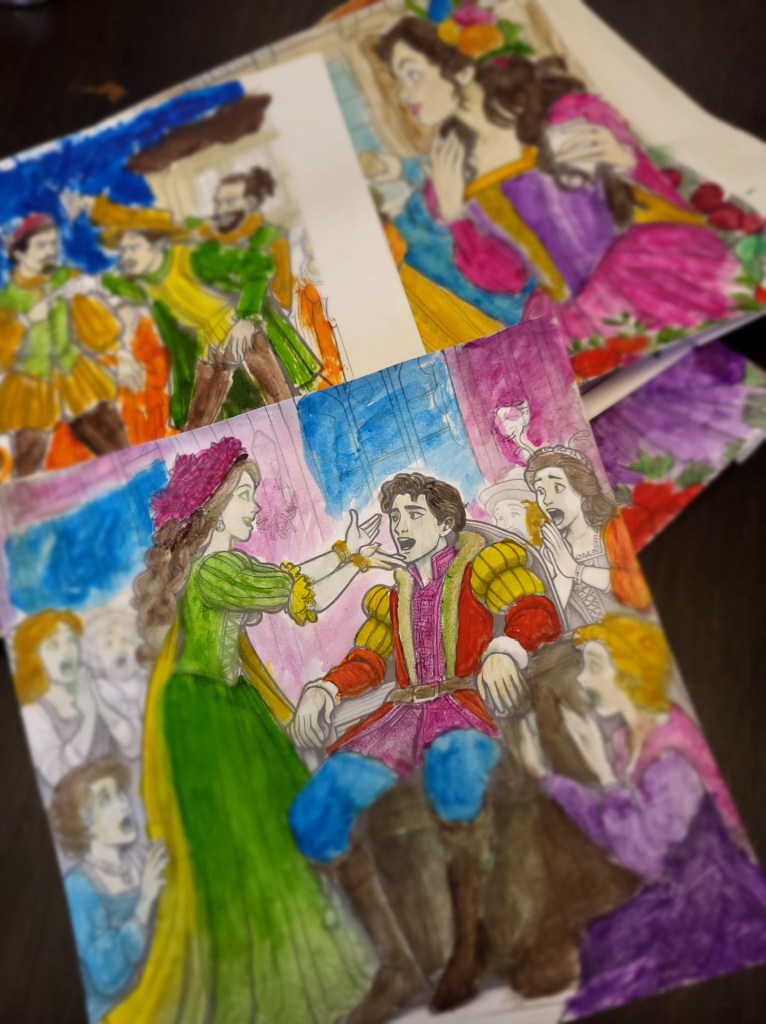
Last night as I was scrolling through Pinterest, hoping inspiration would hit, I had a truly Gen Z epiphany. I couldn’t find what I was looking for, so I turned to Bing Image Generator and ai’d my way to custom “Taming of the Shrew Coloring Pages”. We painted them in class today as we read aloud and I have to say it was a winning combo. The fact that the coloring pages are ridiculous and sport extra arms and legs only makes them more awesome.

Not that there are a ton of people in the world looking for Taming Of The Shrew Coloring pages, but if you are, you’re welcome.

Free Multiplication Flashcards (That go up to the 15’s)

Multiplication flashcards for you! And multiplication flashcards for you! 

Because what everyone needs in their life is MORE flashcards…obviously. 

No, but seriously, these aren’t your standard Target dollar bin flashcards. These go up to 15×15’s which is like the Moby Dick of the flashcard world. You can find up to the 10’s and sometimes the 12’s, but the 13’s, 14’s and 15’s are pretty much impossible to find anywhere (and for good reason, those 13’s and 14’s are pure evil). The only reason I allow such a thing in my house is because CC does them in Foundations, and requires them for Memory Master.  Yes, my older children tell me that it is way easier to do algebra and upper-level math if you see those higher patterns easily. And yes I’ve noticed that the kids with their times tables memorized get through their math faster and with fewer tears. And yes, my 9-year-old uses them to count sheep, chase away werewolves, and ward off bad dreams at night, but you can never convince me that 13×14=182 is anything less than nauseating.  

Classical Conversations bookstore sells a beautiful set of laminated math flashcards that go all the way up to the appropriate 15s, but there are two problems with them.  One they are double-sided, with equations and answers on both sides. A genius solution if you don’t want to carry a mountain of flashcards everywhere, but a real problem when you’re trying to sort out which ones your student knows, and which ones they still need help with. Also, smart kids with photographic memory tendencies, have a habit of remembering the answers for the other side. The other problem is that like all flashcards, they are prone to being chewed on by pets (or baby siblings), used as a bookmark, or lost in the depths of mom’s purse because she naively and optimistically packed them to the dentist. I am embarrassed to admit how many sets I have bought over the years. 

So I finally caved and made my own, mostly so I could print replacement cards whenever I lost one.  

In case you are like me, here you go. My gift to you. Single-sided commutative law flashcards that go up to the 15’s. Now you too can drown in an absolute sea of multiplication flashcards. 

You can download them for free here.  

Or if you feel like supporting my Etsy shop, you can buy them for 99 cents here.  

Also (because once I got going, I couldn’t stop), I made a matching game out of them for all you matching game lovers out there. You can download that here (or it’s also included as a freebie in the Etsy set).

May your printer smile upon you (and I strongly recommend printing in black-and-white with “save toner” selected. Hope this helps!