
Thoughts About Geography, Cartography, Therapy and Homeschooling

“Let me count the ways I love thee…”

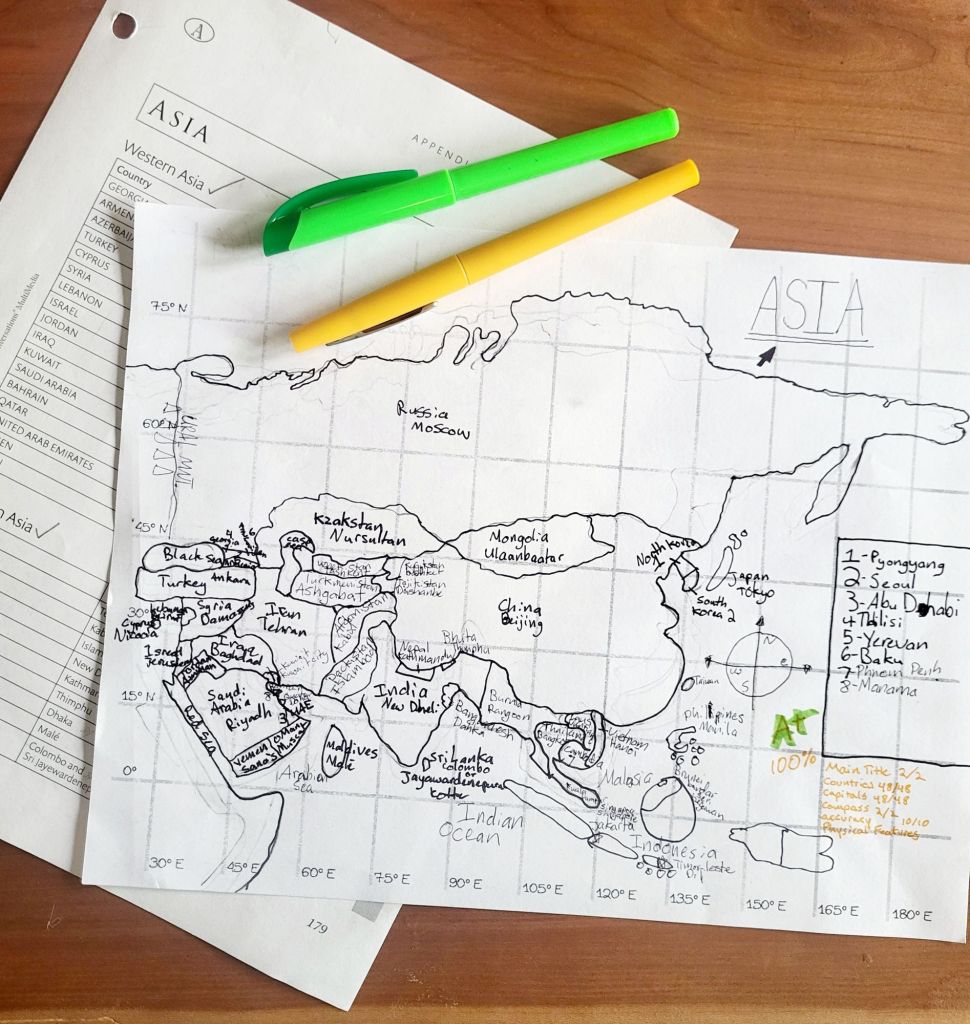
Geography is one of those lost arts that is so smothered in a sea of fake/unhelpful/wannabe books, games, workbooks, and curriculum that sometimes you can’t see the forest for the trees.  It’s one of those instantly marketable items. Slap a map and the word “Geography” or “Educational” on the front of it, and we parents are quick to snap them up off of Amazon, library clean-out sales, hand-me-downs, or the thrift store like they’re desperate promises to our future selves (I mean, surely I’m not the only one with visions of perfectly curated themed bookshelves and travel themed unit studies). And don’t even get me started on the geography-themed games and flashcards…

But all that geography stuff usually is so colorful and well-designed, that you don’t realize it’s kind of shallow and unengaging (and oftentimes downright full of errors). Consequently, the problem isn’t that there aren’t tons of options for Geography, but that it’s a struggle to find stuff you’ll actually use.

And Geography is one of those subjects that packs so much bang for its buck. Not only is it math, history, art, and science all in one parcel, but it’s also visual processing, concrete/abstract processing, spatial processing, executive functioning… all the things. It’s basically a custom-designed torpedo pod of academics and therapy all tied up into one perfect package.  The only thing that might beat it at all those things is the violin, but that’s a post for another day. 

The problem is if you dive in and dig deep and engage with it…drawing and pronouncing, and wrestling with longitude and latitude, various sizes and projections, and whatnot, it’s hard. Sometimes extraordinarily hard, depending on how your kid’s brain is wired (or your brain), but I’ve seen profoundly dyslexic eyes thrive, and dysgraphia fingers map the whole world from heart (I can’t read it, but still…). Not going to lie, I’ve also seen kids cry and I’m not above bribes (and paint…and music…but mostly lots of paint). But seeing their minds grow and the connections made, I feel like it’s worth it to find your way through it. 

And I don’t just say that because I wrote a cartography workbook which you can find here (insert cheesy infomercial music).  Or made a bunch of fun, silly videos to help memorize and draw the world by heart which you can watch here (feel free to judge me, but don’t knock it til you try it…it works). 

In the end, it doesn’t matter, pull out the colorful Costco Walmart Geograph specials, and just have fun with it…but maybe Google fact-check the stuff that doesn’t pass the sniff test. Really, this is an ode to how much I love geography. 😍
Kindergarteners, Sensory Input and the Story of Mr. Thomas of a CC

Sometimes teaching life feels like an episode of Iron Chef, but instead of making tacos out of shrimp, manzanita berries, and Irish peas, it’s trying to keep your class fun and educational on thrift store donations, calcifying craft supplies, and a packet of dry-erase makers. 

I recently read Stories That Stick by Kindra Hall, which isn’t meant for educators, but I’ve found that the business world often has the best (not new) but reframed ideas for home and classroom. It reminded me of back in my Foundations days, when I was an Abecedarian tutor (the little guys in the Classical Conversations world). Homeschooling always attracts a mixture of kids who run the gamut from reciting the entire periodic table of elements at four, to hiding under their desks at co-op or class days pretending to be a gorilla (and oftentimes they’re the same kid). And not that I’m not totally on board with CC’s policy of having the moms in the room on class days, but to be honest, kids listen a lot better when their Nannie McPhee teacher tries to get them to skip count the threes, than when their mom tries to cajole them into participating…at least that was my experience with the younger ages. Honestly, though, I loved every minute of it. I think four and five-year-olds are hilarious, even when they’re painting their neighbor’s frilly pink dress in black shoe polish from their Dore art projects. 

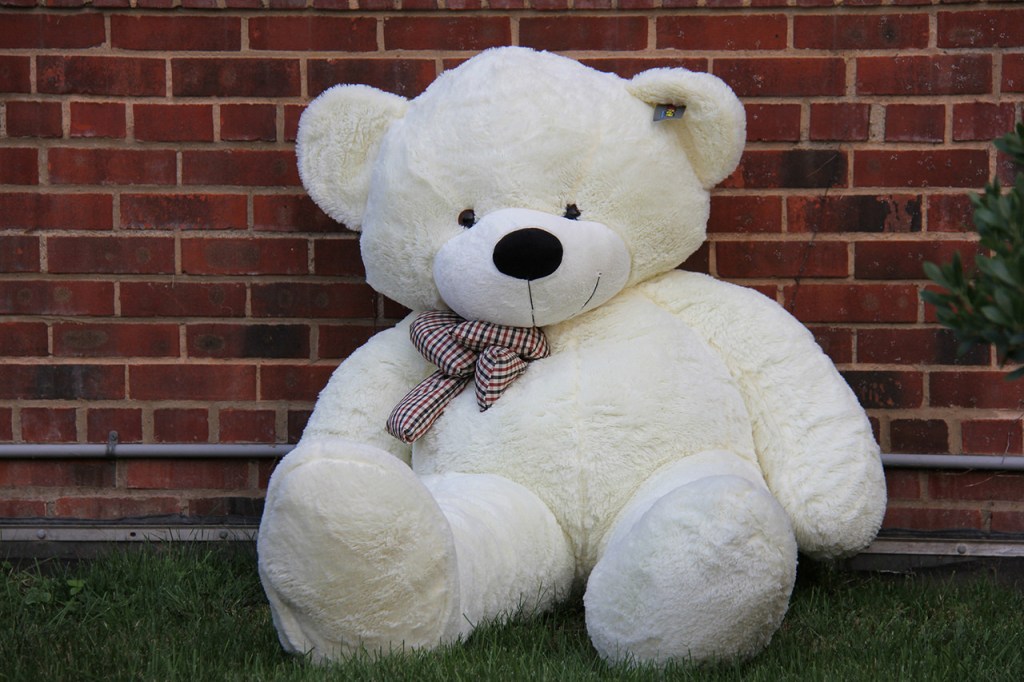
But I digress… Our CC campus at the time also happened to be my home church, and so I sometimes helped clean things out or went through stuff people donated for the nursery, and that’s how I stumbled across Mr. Francis of a CC. He was one of those giant teddy bears kind of like the ones they used to sell at Costco. He was very much not disinfectable for the nursery, but I couldn’t bear to let him go (pun intended…ha). He had so much potential! So I moved him to my CC classroom and I’m telling you, I’ve never had so much success getting preschoolers and kindergarteners to do stuff!

 “Let’s sing the Latin Noun Declensions more loudly and see if we can wake Mr. Francis up!” 

“Mr. Francis is waiting for everyone to sit down quietly before he can chant irregular verbs with us”

“Having a meltdown? Go lay on the giant stuffed teddy bear and give him the tightest hug you can”

“Can’t sit still or keep your hands to yourself? Go jump on the giant teddy bear.”  

 The kids loved him. We created all sorts of make-believe stories and narratives about him and used him for all types of pretend play. It was my best Abecedarian year ever. 

I was sad when I moved on to the older kids the next year and didn’t take Mr. Francis with me.  I don’t know whatever happened to him, I think he ended up finally retiring to a thrift store where I’m now imagining all kinds of Toy Story endings for him. But I think the magic of Mr. Francis lives on and can be recreated in an infinite variety of ways, one just needs two things. 

Sensory input and stories. 

The very large nature of Mr. Francis and the proprioceptive input kids got from jumping on something or falling into something big and soft, was very calming, and the stories and characterization made him real and gave them a reason to not eat their boogers, or helped them stand up tall and straight for their presentations. But really anything works. At that age, you can take playdough and stick googly eyes on it and name it Mr. Slimy Pants or something. Teenagers are a bit harder because they still need the sensory input and stories, but they’re not quite as willing to look silly, but that’s a different blog post for a different day.  

For now, I would just like to say “Rest in peace Mr. Frances of a CC you were well loved, and may your life lessons live on.“

Also, I need a giant Appa in my life. Like this, but way way bigger.