Every year, I try to put myself in the head of a middle schooler and figure out new ways to help them wrestle with geography and cartography. It’s no easy task to memorize drawing and labeling the whole world by heart. Some might even question the necessity (and sanity) of doing so (since let’s be honest, most kids are probably going to forget a lot of it anyway… and what are they going to use it for, answering a Jeopardy question at 40?), but I had to memorize and draw the world by heart as a young teenager, and not only did it make history and politics much easier to follow, it was also like an executive function super course. Taking a big project, breaking it down into chunks, and figuring out ways to remember everything is a huge skill that transfers over to so much of adulthood.
That said, there are certain “hacks” to help information stick in your brain…colors, novelty, music, pegging, mnemonics etc. I try to have my kids and students brainstorm with me, and so here’s this year’s fresh crop of new ideas. Homeschoolers these days have so many more creative tools at their fingertips than I did in the 90s. It’s not fair!
What we’ve come up with for helping to memorize Canada’s provinces and territories:
Big Alps Sing Many Quiet Old Nursery Poems Near Naptime to Young Northern Nomads. British Columbia, Alberta, Saskatchewan, Manitoba, Quebec, Ontario, Newfoundland, Prince Edward Island, Yukon, Northwest Territories, and Nunavut.
Save, print, laminate, cut into cards, and keep around the table while you’re drawing and labeling. Try memorizing and chanting to jump rope, cups, clapping, hop scotch, tango dancing or…you get the idea.
So that helps with the visual working memory, but it doesn’t include the capitals. For that we need a good old fashioned sea shanty. Here’s a song with all of Canada’s provinces, territories and capitals, including Ottawa! (for some reason, kids seem to skip that one).
It very intentionally matches the same order as the acrostic mnemonic, but be careful! The Canadian provinces and capitals might get stuck in your head.
As always, you can find my other Cartography resources here:
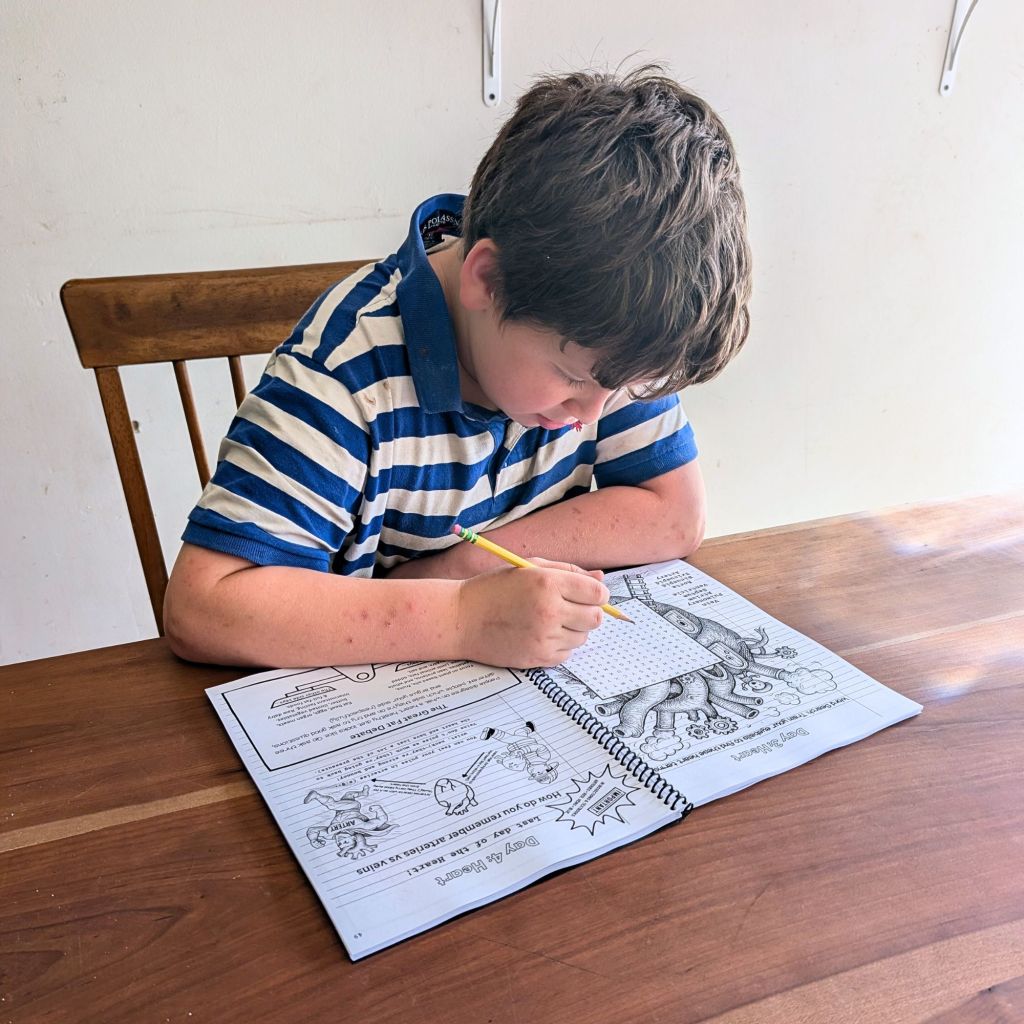
I should have done this a long time ago. I wrote a whole Anatomy Workbook/Curriculum! Between four kids who love science, a mom who is a nurse and loves human anatomy, and my years as a Challenge A Director, I’ve spent the last several months compiling all of my favorite experiments, dialectic questions, simpler drawings, and all the crazy memory hacks my mom used when I was little to help us memorize everything. It was one of those projects where I felt like I could have kept writing it forever, adding new interesting research and information I dug up, but I also wanted to make it doable. An independent, open-and-go curriculum with an easy answer key that wasn’t online and was screen-free. I also tried to tap into middle schoolers’ natural desire to form opinions and argue with everyone around them. Ahem.
You can find the printable digital version here. Or… You can find the printed and mailed-to-you version here.
And now, on to the thing that sparked this whole adventure. I think THE TALK is a universally dreaded conversation to have with your kids, and it always seems to be in capital letters in one’s head. And the worst part (at least in our family) is that when you finally muster up the courage to have the conversation, you forget that your kid has an auditory processing problem, and you make it so low-key and chill that they promptly forget the whole thing, leaving you to experience Groundhog Day. Good times. The internet is chock-full of all kinds of books, instructional material, and helpful advice, but it can be daunting and overwhelming, and thus we disassociate until another day and hope we don’t wait too long, or heaven forbid, give it too soon (where are my pearls to clutch).
So don’t take this as advice or a strong opinion, but if you’re looking for a plain, factual lesson, I’ve got you covered. For those who have visual learner kids, but don’t want something super graphic and are looking for a more science-friendly approach, here’s the Reproductive System Lesson from the workbook. A freebie science printable, as they say. You can hand it over, or do it alongside them, or edit it, or use it as a starting point to build with more information as they get older and more mature (or perhaps less mature in the case of middle schoolers). Enjoy!
Or you know, you can always go the super expensive route and buy a homestead and have animals, and then the reproductive education (mostly) takes care of itself!
We only have three weeks of school left, the green baby leaves have finally outnumbered the gray tones, and I’m sitting in my living room wallowing in jello-like humidity (which I know is only a whisper of what’s to come, but in comparison, it’s for sure a hearkening). Clearly, Summer is almost here.
I’ve been mulling over what we want to do this summer: Hopefully, lots of gardening, river floating, and playing football or basketball in the morning after we’ve slept in, eaten homemade crepes, and read books together (one can dream, right?). But when I was thinking back to what has worked in previous summers I realized there is a clear winner that has threaded its way through all of our summers since my oldest was a wee lad.
Yeah, I know it’s kind of old school at this point, but I swear it really does painlessly teach fast arithmetic facts. I’ve always called it their “summer vitamin” and no one has really balked at it much, although that may be because it takes less than 10 minutes and has a clear beginning and end.
I don’t like to use it during the school year because Saxon takes so long that even ten more minutes feels like a duel-worthy insult, but I like to pull Xtra Math out in the summer just to keep everyone’s minds sharp.
And if we don’t get to it because we’re camping or picking ticks off, well then…that’s ok too.
Taking uninterested children to museums and field trips is BRUTAL. On one side you tell yourself that your children need to be educated and cultured and have their horizons expanded, on the other side you have the students/children themselves who are loudly protesting how much they hate said field trip. And then you have all the older responsible folk who are all “when I was a kid, we didn’t complain about…”.
And while you’re trying to internally juggle all the things, you’re also trying to pretend that you have nothing else in the world to do than make everyone happy. You’re not also wondering how you’re going to grade papers, get dinner on, feed the dog, schedule the orthodontist appt etc. I mean, I don’t know about you, but I live for bridging the gap between cranky docents who think “children should be seen but not heard” and said children who are convinced the world is devoid of food and fun.
Now that I think about it, I’m not being sarcastic…that’s literally what I live for. I think I may genuinely enjoy bridging that gap between the old and the new.
But I digress.
I happen to so privileged as to live within bike-riding distance of where the Little House On the Prairie series was written. That’s right. The real Laura Ingalls Wilder herself, wrote the famous books not a stone’s throw away from my house. Consequently, my children have been once…or twice…or several…ok many times to the original homestead tours and museum. So when our CC group had a field trip there, I knew I was going to walk that fun tightrope between the out loud “of course we’re going!” and the intense hushed “yes we are going and you are going to be polite and listen to the tour guide and say “yes ma’am and thank you”.
As I was agonizingly doing math with the youngest beforehand, in an attempt to get school done “early”, I realized I was going to need a backup plan. Having been before, I was mentally imagining a bunch of elementary-aged boys (and girls) trying to squeeze into the tiny 120-year-old kitchen filled with priceless artifacts. AND they were successfully supposed to not move or touch anything. Lord have mercy. So I came up with a “scavenger hunt”.
Now granted, I know this is harder to do if you’re traveling and don’t know what you’re getting into, but I think it’s really a fantastic plan. Kids like goals. Kids like tangible things. Sometimes their brains are too underdeveloped to match the grammar with the rhetoric, so they need a bridge. The bridge in this case was an orange wet-erase marker and a laminated sheet of notebook paper. I scribbled down 15 things for them to find and answer, and I evenly divided the tasks between the exhibits and the museum. The reward was a stick of “Penny candy” that now costs 40 cents. Ho hum. Economics lesson aside, I would happily pay 40 cents per kid in order to not get permanently banned from a museum. Of course, the plan did backfire on me when the kids were SO EXCITED to see Pa’s fiddle and to see where Laura lost the money for her homestead, that they went in like a drove of invasive grasshoppers, and promptly got their butts set down by an elderly docent. By the time I sauntered in (a few moments behind them), she was already wrapping up the “don’t make noise, don’t touch anything, don’t breathe on anything” lecture and was ready to launch into the “how to be a responsible chaperone lecture.” What she didn’t know, was that I am happy to take one for the team, in fact, I’d be happy to have her come lecture my children every morning, but she didn’t seem interested in that. Shocking.
After the field trip was over, my kids said it was the best field field trip ever. So. much. fun.
The key really was the “scavenger hunt” (and maybe the presence of their friends, but who’s counting). Everyone needs a job or a mission, and I totally get it! When I was in Paris, I had a mental checklist of everything I wanted to see, and learn, and understand. Why would kids be any different? They just need a little abstract hand-holding.
I’m going to start doing this every time I find myself chaperoning a field trip where I know I’m going to be in over my head. However next time I’m going to have a chat with the Gift Shop Lady first, and I’m also not going to forget all my scavenger hunt stuff on the table. I’m wondering, should I go back and get my pens and paper? Cut my losses? Save face? or chalk it up to a good laugh?
Also, if you ever come to visit, I will happily show you where Laura and Almanzo’s secret cold spring is, and tell you all the “exclusive conspiracy theory” stories.
People hate on personality tests and paradigms, but I unabashedly love them. Sure, I get it. Are they perfect? No. Are they backed by Science? Maybe a few of them…kinda sorta. Do people use them to excuse all kinds of bad behavior? I’m definitely not guilty of that…ahem.
The reason I think they’re helpful though, is because the human brain can’t help but see patterns. And then we’re like If You Give A Mouse A Cookie. Once we start seeing patterns, we start separating things into categories, and then we start mentally building projections. If those predictions are right, we start to build whole systems. I genuinely think we can’t help it. Most of us do it subconsciously. Of course they aren’t ever going to be perfect systems because humans are infinitely complex, but they sure help navigate life. And I don’t think I could navigate classes, kids, and meetings without them.
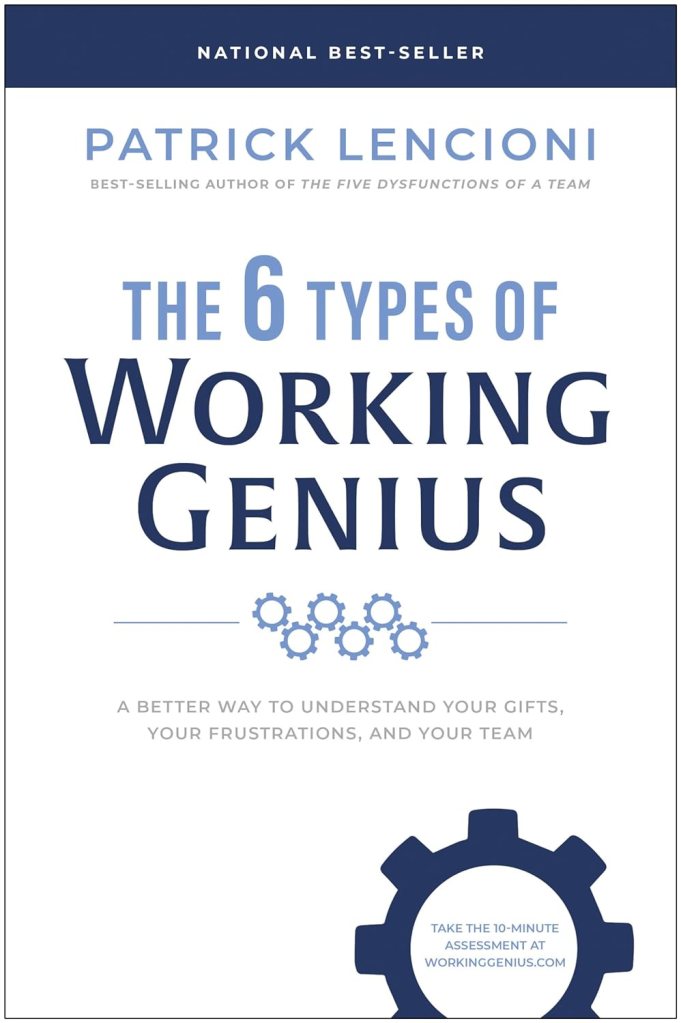
The 6 Types of Working Geniuses. This is the number #1 book that changed my outlook on life last year when I was super discouraged and felt like I was swimming uphill with two swimsuits and concrete boots on (was that enough mixed metaphors?…maybe add a Sysphyian rock). Yes, it’s a business book, but sometimes those have the best crossover takeaways. This one helped me figure out how to work with families, students, tutors, and my own kids, because instead of being a personality book that’s more about you, it’s more about how a group works to get things done. Some people hate the “story” format, others love it. I was more in the former category but it wasn’t so bad I couldn’t get through it to get to the good stuff. It’s also a super quick listen on Audible if that’s more your thing. (If you read or listen to it, I’m dying to know what your geniuses are)
2. Myers Briggs Cognitive Functions. This goes beyond your basic “extrovert/introvert/judging” dichotomy. If you’ve ever heard someone criticize Myers Briggs because they don’t want to be boxed in, or there’s no way there are only sixteen types of people in the world, “cognitive functions” is the key they’re missing. There are a million books on the topic, but I like this internet article, along with a little interactive chart that tells you what the various function stacks are. This helps on a more practical level with kids and learning styles. I notice my students/kids’ dominant functions pretty quickly and then can modify or customize the learning for them.
3. Gorilla Mindset. This book is definitely in the “Dude-Bro” category, but I’m including it here because he has more practical and tangible ways to have a growth mindset instead of the more esoteric theoretical stuff. I’ve used it to help multiple kids work through meltdowns and it’s especially helpful for the kids who are perfectionists and spiral. The ones who go from “I can’t do this math problem” to “What’s the point of life, I’m the worst/stupidest/dumbest kid ever” in a nanosecond. I don’t agree with everything he says, so don’t just hand it to a kid, without reading it first, but it has some useful tips.
I always feel leery talking about this kind of stuff in public, because it generates such strong opinions from people. So if you’re the type of person who likes things to be black and white, or finds this sort of thing super obnoxious, or thinks that business books are actually written by aliens that Elon Musk has hired to take over the world…then definitely just hit “skip”. I’m more of a “glean and use what you can” kind of thinker.
This is a small story that features a few homeschooling moms doing life together and me eating my words.
I teach high school Latin at our little cottage school and I’m not going to lie, it’s rough going some days. I occasionally (jokingly!) wonder what I did in a past life to deserve loving Latin so much. Like why couldn’t I have been a surfing instructor? Or teach kids to ride horses? I get jealous of the kids’ jiujitsu instructor. They absolutely love her. The tougher she is on them, the harder they work and the more they respect her. But jiu-jitsu is way cooler than Latin. It’s really not fair. I mean, how did I get stuck trying to impart the love of dead languages to the next generation? It’s like I chose this life or something.
My esteemed prodigies really have learned a lot though this year, and I’m proud of the trenches we’ve slogged through. So proud that I got a teeny tiny bit defensive on their behalf when Andria brought in an entire booklet of charts for them to work on. They’re doing great! They don’t need charts! Away with the charts! In her defense, she just got a spiral binding machine and if that was me, I would be printing and spiral binding everything in sight (right after I laminated it).
After I passionately and eloquently pleaded the case against repetitive charts, she brought out the big guns by invoking the name, “Mrs. Owen”. She basically has homeschooling sainthood status in our house at this point. Back in the early days of cottage school, back when we lived in California, and the boys were wee young lads, she was the one who got everyone doing brain training exercises. She was the one who pushed us to help our kids learn to read when we were ready to give up. She was the one who refused to give up on what seemed like hopeless cases. And she was the one who had our 9-year-old boys writing out verb anatomy charts and noun cases like they were second nature. Charlie knew his English and Latin verb tenses better at ten years old than I did as a middle-aged woman. Even today I’m pretty sure you could pull a fire alarm, shine a flashlight in his face, drag him out of bed in the middle of the night, and say “Conjugate laudo/laudare in all 6 indicative tenses” and he would churn them out without even opening his eyes. Andria did the same with the kids and math facts.
So they clearly work.
I don’t know why I fight them so hard sometimes. I guess because they truly are unpopular these days and I want to be like the cool kids. I also think that for some kids they don’t work as well, and they shouldn’t take too big a chunk of the “learning” pie graph. They don’t replace good conversations, deep understanding, and different kinds of learning, but they definitely add to it. They also are great time fillers for one kid to do while you’re working with another kid.
For me, my kids aren’t the fastest workers in the world, so we don’t always have time to finish all the charts, but that’s the beauty of doing school with other homeschoolers, you balance out each other’s weaknesses.
When Andria reminded me of Mrs. Owen and how our kids thrived under her reign of charting, I had to cede the field. I probably will never love charts, but I see their place in life. Some of my kids actually like doing charts and all of my kids probably need to do some more repetitive memorization. When you know something so quickly and easily that it’s almost second nature, it frees up your brain to make all kinds of more abstract connections. It makes understanding things much easier, and innovation follows shortly on its heels (even if that innovation involves figuring out how to write only half your math problems down).
Really this is an ode to the Mrs. Owens and Mrs. Tallmans of the world. Thank you for not throwing the baby out with the bath water. Thank you for holding the line. Thank you for investing in my children.
(but I still probably will only do half of the charts).
Sometimes teaching life feels like an episode of Iron Chef, but instead of making tacos out of shrimp, manzanita berries, and Irish peas, it’s trying to keep your class fun and educational on thrift store donations, calcifying craft supplies, and a packet of dry-erase makers.
I recently read Stories That Stick by Kindra Hall, which isn’t meant for educators, but I’ve found that the business world often has the best (not new) but reframed ideas for home and classroom. It reminded me of back in my Foundations days, when I was an Abecedarian tutor (the little guys in the Classical Conversations world). Homeschooling always attracts a mixture of kids who run the gamut from reciting the entire periodic table of elements at four, to hiding under their desks at co-op or class days pretending to be a gorilla (and oftentimes they’re the same kid). And not that I’m not totally on board with CC’s policy of having the moms in the room on class days, but to be honest, kids listen a lot better when their Nannie McPhee teacher tries to get them to skip count the threes, than when their mom tries to cajole them into participating…at least that was my experience with the younger ages. Honestly, though, I loved every minute of it. I think four and five-year-olds are hilarious, even when they’re painting their neighbor’s frilly pink dress in black shoe polish from their Dore art projects.
But I digress… Our CC campus at the time also happened to be my home church, and so I sometimes helped clean things out or went through stuff people donated for the nursery, and that’s how I stumbled across Mr. Francis of a CC. He was one of those giant teddy bears kind of like the ones they used to sell at Costco. He was very much not disinfectable for the nursery, but I couldn’t bear to let him go (pun intended…ha). He had so much potential! So I moved him to my CC classroom and I’m telling you, I’ve never had so much success getting preschoolers and kindergarteners to do stuff!
“Let’s sing the Latin Noun Declensions more loudly and see if we can wake Mr. Francis up!”
“Mr. Francis is waiting for everyone to sit down quietly before he can chant irregular verbs with us”
“Having a meltdown? Go lay on the giant stuffed teddy bear and give him the tightest hug you can”
“Can’t sit still or keep your hands to yourself? Go jump on the giant teddy bear.”
The kids loved him. We created all sorts of make-believe stories and narratives about him and used him for all types of pretend play. It was my best Abecedarian year ever.
I was sad when I moved on to the older kids the next year and didn’t take Mr. Francis with me. I don’t know whatever happened to him, I think he ended up finally retiring to a thrift store where I’m now imagining all kinds of Toy Story endings for him. But I think the magic of Mr. Francis lives on and can be recreated in an infinite variety of ways, one just needs two things.
Sensory input and stories.
The very large nature of Mr. Francis and the proprioceptive input kids got from jumping on something or falling into something big and soft, was very calming, and the stories and characterization made him real and gave them a reason to not eat their boogers, or helped them stand up tall and straight for their presentations. But really anything works. At that age, you can take playdough and stick googly eyes on it and name it Mr. Slimy Pants or something. Teenagers are a bit harder because they still need the sensory input and stories, but they’re not quite as willing to look silly, but that’s a different blog post for a different day.
For now, I would just like to say “Rest in peace Mr. Frances of a CC you were well loved, and may your life lessons live on.“
Also, I need a giant Appa in my life. Like this, but way way bigger.
Full disclosure, I was one of those kids. Notice I said ‘was”, because along with my black thumb, and fear of talking to strangers, time really does heal all things (or most things). While I won’t be winning any Nobel prizes in astro physics, nor becoming a horticulturist or the next Malcolm Gladwell, I have mastered all those things to the point where I don’t start panicking and breaking out in hives when I have to do trinomial equations or save the butternut squash from the vine borers. (Well mostly there’s no panicking, I do still occasionally turn bright red when talking to strangers).
Part of it is some kids just don’t like numbers, or maybe it would be more accurate to say, that numbers don’t like them (I’m looking at you Dyscalculia). I mean, there’s nothing wrong with their brains, numbers are just slippery bits of squiggly lines that go in one ear and fall right out the other. I didn’t realize I could do math until I met geometry and propositional logic. Put interesting concepts and theories in His Royal Majesty the King’s English and suddenly it all makes sense.
But now that I’ve taught math both in the classroom and at home for fourteen years now, I’ve made some observations. There’s a group of kids who seem like they’re bad at math, or maybe it takes them forever to get through a lesson, but it’s not because they have the aforementioned Houdini number problem. They usually have really good number sense…too good. And that’s their hangup. For kids who have more abstract brains (Ne or Ni for the Myers Briggs nerds), their mind has to do a lot of sorting and thinking and connecting while they’re doing math. They can’t just be told how to do something. They tend not to trust it, and they second guess themselves constantly because nobody gave them all the puzzle pieces and they’re missing connector pieces that would bring the whole picture together. Now obviously there is a brand of math lover who is both abstract, loves arithmetic, is good with numbers, and is super fast…but we’re not talking about those unicorns. We hate those people (just kidding…and if any of my brothers are reading this, no I really am jealous proud of your ridiculously impressive math skills). For the math sloths, the problem isn’t that they can’t do math, the problem is they’re climbing a mountain in their head where you can’t see, and then having a meltdown like Mt. St. Helens because they’re sure they’re the worst math student the world has ever seen and they’re never going to understand it (middle schoolers are especially dramatic about math…ask me how I know).
At this point, I think I have bought and tried every math curriculum on the market, including but not limited to Singapore, Math U See, Saxon, Horizon, Bob Jones, Abeka, Rod and Staff, The Good and The Beautiful, Teaching Textbooks, Life of Fred, Right Start, Houghton Mifflin, Beast Academy, and Shormann. Whew.
The only one I truly hate is Saxon, which ironically is also the one we are currently using. I only hate it because it’s what I used as a kid and spent too many hours fantasizing about ways to burn it, but my kids seem to be thriving with it, so here we are (Mom, you can feel very vindicated right now).
If I had to pick my favorite combinations, it would be to use RightStart for the younger years (love that program). But it’s pretty teacher-intensive, so I like to use it alongside Rod&Staff which has very simple black-and-white consumable workbook pages. Perfect for days when you need to help the older ones more or you just can’t fit the raison d’etre RIghtStart in your day (seriously, the thing is a beast). Then for the older kids, I used to recommend Shormann, until I figured out that most teenagers can hack that thing with their eyes shut and get an “A” without actually learning a blessed thing. So now I prefer Nicole the Math Lady, who uses Saxon but actually explains everything like a normal person.
But my biggest piece of advice for the slow-hiking, Mt. St. Helen math kids, is to set a timer and scale. Acknowledge and praise them for the invisible rabbit burrows they’ve dug all through their brain. Encourage them that they are good at math (because they truly are). Set a timer for 60 min, and assign odds or evens. But don’t let them stay at camp happy-go-lucky. They really do need to get to a normal speed eventually. I mean, I don’t know what project engineers do when a bridge needs to be finished and everyone is waiting on them, but I imagine nobody is happy to sit around wasting money while their engineer gazes off into the distance making math connections. So at home, while you still have the chance, make some achievable goals for speeding up and pushing themselves a little.
Easy + One is what I always say.
And hug a kid who says they hate math, chances are they will eventually love it.
Sometimes I feel like Wendy with the lost boys around here. Homeschooling on most days feels like a battle, but somehow we tarry on. One of the main reasons I chose Classical Education was because it focuses on teaching kids how to learn, instead of what to learn. Sounds great, but turns out teaching a house full of wild boys how to learn, is way easier said than done. If you’ve hung around Classical education circles at all, then you’ve read or heard about Dorothy Sawyer’s essay titled “The Lost Tools Of Learning”. (it’s a quick read and I highly recommend it). In it, she basically does her version of “Back in the good ol days…”. But I’ll admit, it’s a compelling if laughably unattainable goal. I first read it when my kids were in diapers, and so incredibly naively optimistic that I mentally raised my hand and said “Yes! Pick me! Let’s do this!”. She’s a very persuasive lady. Ahem.
Then I had one boy after the other who struggled with writing, reading and everything in between…basically poster children for those who do NOT do Classical education. My personality gravitates more naturally to the Charlotte Mason school of thought (and I still like it in theory and intuitively teach that way), but I was too unstructured of a mom to use it well. Classical Conversations is where we ended up, which is like the McDonald’s of the Classical education world. Franchised and systematized. Not going to lie though, it’s been a struggle. Nothing about homeschooling has come easy. When one of my kids memory-mastered for the first time, it was a whole ordeal. The kind of ordeal that includes blood, sweat, and tears. I googled ways to make things stick, I sat with him for hours, we tried all of the tricks. Over the years I’ve read enough books to fill a library on how to utilize working memory, how to work with kids with dyslexia, apraxia, auditory processing disorder, ADHD etc. One of these days maybe I’ll write my own curriculum with all of the things I’ve picked up from a hundred therapists, books, and research, but for now… if anyone feels like they try to explain a concept to their child a dozen times and it’s not sticking, or if you’re in CC and have a kid who is struggling to memorize their grammar work, here are a few things that work around here.
Flashcards with stick figures and pictures. This was the game-changer last year. Last year I had to sit down and figure out where all of the holes and struggles were and then make up silly mnemonics and draw them onto flashcards or whiteboards. The three rules are: It has to be colorful. It has to be silly/funny. It has to be IN and ON the words themselves and not above it or beside it (i.e. “The Progressive Era” gets turned into a car with a giant ear riding on it).
Laminate things that need to be memorized. Homeschooling moms are like Monica Gellar when it comes to laminators. We will laminate anything. We love laminating. It’s more satisfying than picking dried glue off your hands. Add some wine and a few friends and it’s my ideal party. Laminating memory work was the game changer this year. Then my kids can take it outside, on a skateboard, in the mud, in the shower or in a box with a fox. Since my kids are all super active, this is really what made a difference. Once kids learn how to memorize, everything in life becomes easier (and not just school things, it’s like their working memory and prefrontal cortex can function a lot better across the board).
Cross the mid line. With younger kids you can do this with hand motions. With older kids, you either have to sit down with them and learn a bunch of Fortnite dance moves, or do those hand slappy things… or bribe them. Whatever the case, taking a drink of water then breaking memory work into moves that cross the mid line really works. And don’t ask me why the water thing is really important, but it’s a scientific thing. Those youtube kids yoga videos work great too. It’s like it unlocks something and the right brain and left brain stop fighting each other and start working together.
I’m so proud of my kids and their small victories. I remember when my oldest finally figured out how to teach himself things and it’s almost better than the moment a kid is truly potty trained…almost.
I actually shouldn’t be writing about this, I should be reading about this. Somewhere in my desire to not raise legalistic kids, we developed an electronics addiction in this house. It’s bad, as in I probably need a step by step AA level-esque game plan to kick the habit that doesn’t include never using electronics, and isn’t full of inspirational quotes. I need it to be practical and pragmatic. Does it exist?
In the meantime, this is what works thus far.
Put them to work. Trying to lure my children off of electronics never works. All of their toys are boring, there’s nothing to do and it feels like they sort of wade through life waiting for the next opportunity to get on electronics…even if that’s five days away. But if I assign mopping the floor, scrubbing the toilet and raking leaves in the backyard, they all do their jobs and then magically find plenty of things with which to entertain themselves.
Play by yourself. Adults don’t usually sit on the floor in a batman mask and start building a giant zoo out of magnatiles and play animals. So when we do sit on the floor and start playing with toys, it’s like catnip. The same mom radar that allows babies to sense when a parent is trying to lay them down in a crib, is still alive and kicking at the older ages. If you build it, they will come. Good luck trying to sneak away.
Turn off the router. Preferably have your husband turn off the router remotely from an app for the best Deus Ex Machina effect. If they start to read the instruction manual for the router, crawl under the house to see if the Cat5 cable is still intact, and hypothesize with each other on ways to fix the internet, then at least they’re getting language arts, PE and Socratic discussions done.










 Scholar Forge