Devotional Graffiti

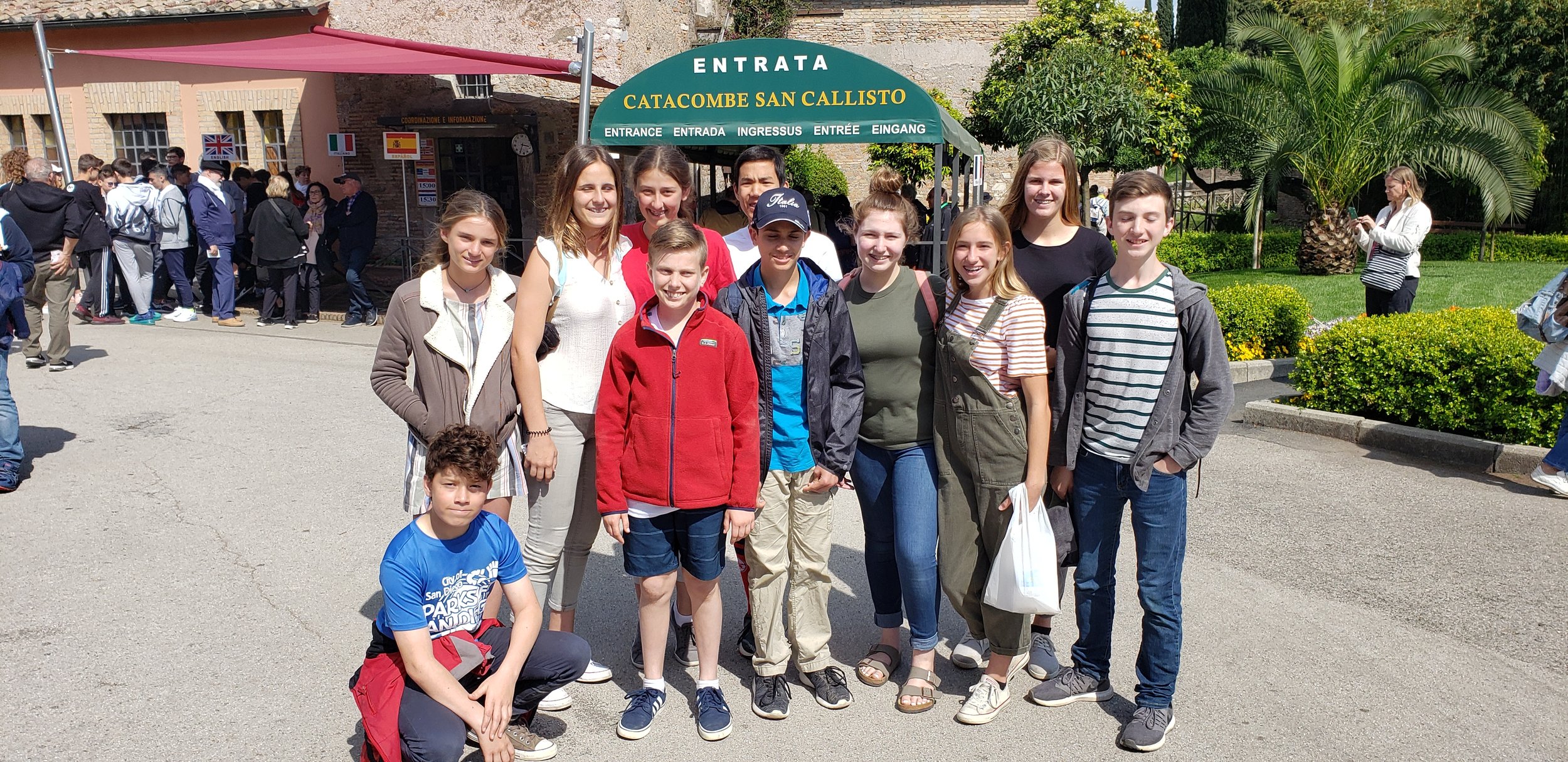
Once upon a time, we took our Classical Conversations Challenge B class to Rome and it was life-changing.

As we were sitting in church tonight for our Good Friday service, something in the sermon reminded me of the Rome Catacombs (not to be confused with the Paris Catacombs…cough cough). So I’m reposting my blog/journal entry from that epic homeschooling field trip here. (maybe mostly to remind myself that I need to take the next batch of students to Rome).

Today was the last full day in Rome and each day I’ve thought was the best… so of course today was no different. At one point I was flying down the infamous Appian Way in a taxi listening to 70’s music, discussing the resurrection message we’d just heard deep under the earth in the catacombs, and I had to pinch myself to make sure I wasn’t dreaming. 

Jamie and I started out the day with cappuccinos and chocolate croissants like we always do.  I kinda never want to see a chocolate croissant again, but the coffee I will miss.  Not that we don’t have good coffee in San Diego, but our truly good coffee has to be sought out like the holy grail, whereas it’s on every street corner in Rome. …Actually, that’s how Rome is in general. Our most glorious basilica in the United States is copied and pasted a hundred times in Rome.  In Rome, you’ll be walking around a church trying to take it all in and figure out which painting is the Raphael you’re looking for, when you find out the church’s relic is Baby Jesus’s manger. Jamie said he didn’t really picture the nativity with a manger of intricately wrought gold, silver, and jewels,…which is what it looks like… but the humble wooden manger is protected inside of it. (The jury’s out in the academic world on whether it really is the authentic manger). 

The religious lines got a little wonky for me today.  I’m a happy protestant who grew up Evangelical but appreciates the beauty of the more liturgical Presbyterian church. I used to be staunchly reformed and Calvinistic on all things (and I still am), but the older I get the more “big tent” Christian become. In some ways, I think of each type of Christian as a genus that’s entrusted with doing one thing (or a few things) well. The Roman Catholic church has the market on tradition, loyalty, and engaging all five senses. 

We went to the oldest church in Rome and I could picture the early home church that started on that spot, and I could see its transformation through the ages, and I could witness people worshipping Christ today.  Across the street from the oldest church, there are stairs where Jesus allegedly walked up to his trial (Constanine’s mother brought them from Herod’s palace in Jerusalem). The marble steps are so worn and sloped from thousands of years and millions of Catholics kneeling and praying on them, the steps have been closed for the last three hundred years. They’re open now. For a few months, you can pray on your knees up the twenty-some-odd steps. Even if they aren’t the real stairs Jesus walked on (I can’t turn off the rational part of my brain), it was a moving scene. 

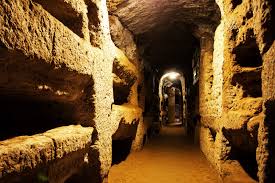
I didn’t think anything could top the manger, Herod’s stairs, and the oldest church, but the catacombs were the next thing on the itinerary. I was nervous because it had proved super challenging to get tickets for our group.  The lines are long and limited everywhere (and for almost everything) in Rome. So in order to get 22 tickets for anything, we had to book them in advance. The Colosseum, Borghese, and the Vatican were all challenging in their own way, but the catacombs were most difficult on the front side due to the language barrier, specific rules, and lack of 21st-century technology in use to aid communication halfway around the world. After much angst and multiple tries (and being hung up on several times), all I had was an email that said “Your reservation is confirmed”.  No order number, no mention of what that confirmation entailed. It worked out perfectly though. A sweet old Italian gentleman had our tickets reserved for us on his handwritten list (the couple behind us were from San Diego too!).  All of the guided tours that go through catacombs (and aren’t third-party tours) are led by a priest. Ours was Father Tren. He didn’t look like a stereotypical catholic priest. He was wearing jeans and a sweatshirt, was young, and had a dry sense of humor. He preached the gospel with such sincerity and passion: Though the catacombs are deep underground, dark, and filled with the dead, it is actually a place of hope. Hope in the resurrection. At the end, he prayed for us, that we would be encouraged and strengthened not to get discouraged. To remember those who came before us. To rest in the saving power of the cross. Even the atheist was moved. There are 500,000 Christians buried down there, with marble slates filled with Latin and Greek…lots of them with misspelled words and grammatical errors. The walls are filled with scratchings of messages “I miss you.” “We will see each other again.” “May God be with you”. Father Tren called it “Devotional Graffiti”. 

We finished the last day with the usual three-hour dinner from 8pm to 11pm, we’ve got lazy our last few days in Rome and have been eating at the restaurant right next door. The servers gave us hugs tonight and told us to come back…which was big of them. I could never quite tell if they had a panic attack every time we walked in with 12-18 people or if they appreciated the business we brought. Jesse wins the prize for the most adventurous eater this trip with fried sheep brain for first place, and Ben is right behind with squid for second place. Honorable mention to a parent for the consumption of tripe.  Jamie wins for most gelato consumed, and Hayley wins for most candy consumed. My favorite dish was veal and artichokes and I will miss being able to enjoy a glass of wine. It didn’t give me a migraine like it does in the States which makes me think it was all in my head in the first place (pun intended?). Maybe I should give wine another try, or maybe I’ve grown out of it. 

Not ready to leave, but feeling like a homing pigeon who needs to set the course back for home.  I’m not actually a very adventurous person. I don’t particularly love to travel, and I much prefer my own home and people. But my ideas get ahead of what my biological self prefers to do. Thus the conundrum of magical trips like these (but so worth it). 
upload.jpg
upload.jpg

Thoughts About Geography, Cartography, Therapy and Homeschooling

“Let me count the ways I love thee…”

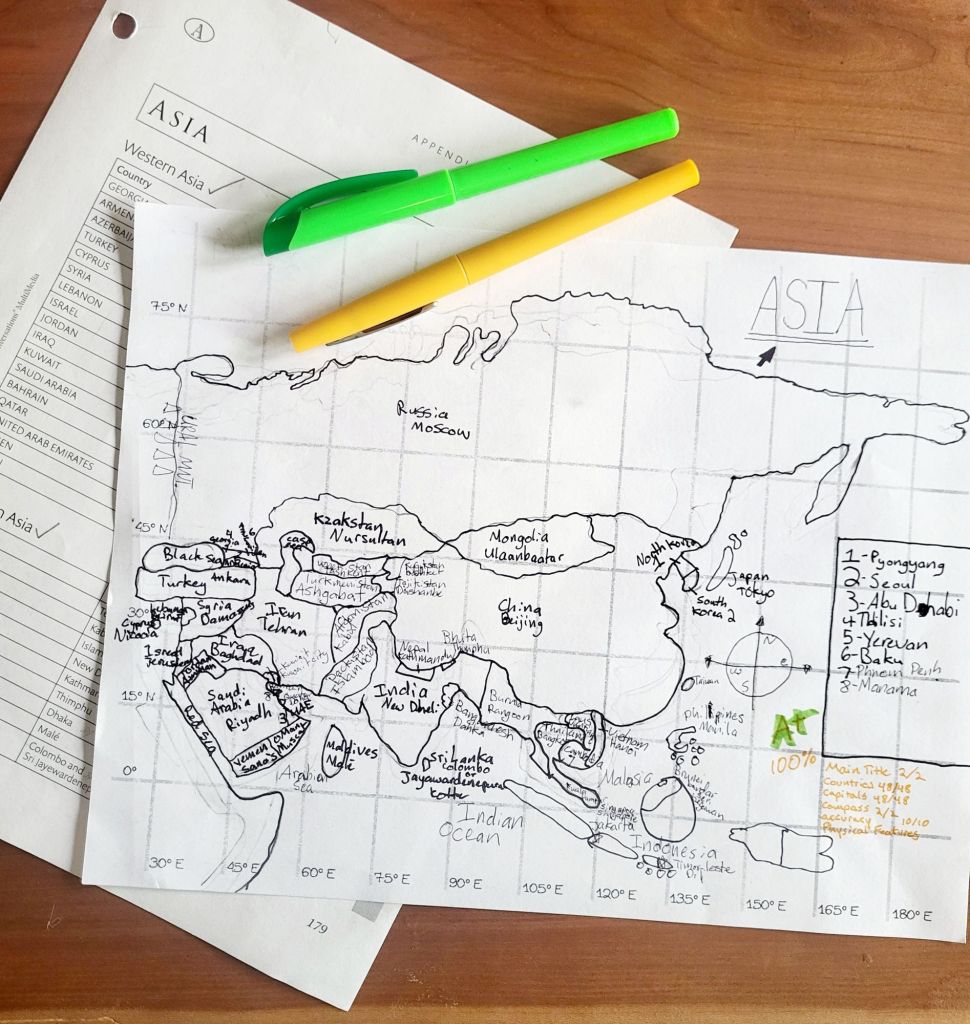
Geography is one of those lost arts that is so smothered in a sea of fake/unhelpful/wannabe books, games, workbooks, and curriculum that sometimes you can’t see the forest for the trees.  It’s one of those instantly marketable items. Slap a map and the word “Geography” or “Educational” on the front of it, and we parents are quick to snap them up off of Amazon, library clean-out sales, hand-me-downs, or the thrift store like they’re desperate promises to our future selves (I mean, surely I’m not the only one with visions of perfectly curated themed bookshelves and travel themed unit studies). And don’t even get me started on the geography-themed games and flashcards…

But all that geography stuff usually is so colorful and well-designed, that you don’t realize it’s kind of shallow and unengaging (and oftentimes downright full of errors). Consequently, the problem isn’t that there aren’t tons of options for Geography, but that it’s a struggle to find stuff you’ll actually use.

And Geography is one of those subjects that packs so much bang for its buck. Not only is it math, history, art, and science all in one parcel, but it’s also visual processing, concrete/abstract processing, spatial processing, executive functioning… all the things. It’s basically a custom-designed torpedo pod of academics and therapy all tied up into one perfect package.  The only thing that might beat it at all those things is the violin, but that’s a post for another day. 

The problem is if you dive in and dig deep and engage with it…drawing and pronouncing, and wrestling with longitude and latitude, various sizes and projections, and whatnot, it’s hard. Sometimes extraordinarily hard, depending on how your kid’s brain is wired (or your brain), but I’ve seen profoundly dyslexic eyes thrive, and dysgraphia fingers map the whole world from heart (I can’t read it, but still…). Not going to lie, I’ve also seen kids cry and I’m not above bribes (and paint…and music…but mostly lots of paint). But seeing their minds grow and the connections made, I feel like it’s worth it to find your way through it. 

And I don’t just say that because I wrote a cartography workbook which you can find here (insert cheesy infomercial music).  Or made a bunch of fun, silly videos to help memorize and draw the world by heart which you can watch here (feel free to judge me, but don’t knock it til you try it…it works). 

In the end, it doesn’t matter, pull out the colorful Costco Walmart Geograph specials, and just have fun with it…but maybe Google fact-check the stuff that doesn’t pass the sniff test. Really, this is an ode to how much I love geography. 😍

Kindergarteners, Sensory Input and the Story of Mr. Thomas of a CC

Sometimes teaching life feels like an episode of Iron Chef, but instead of making tacos out of shrimp, manzanita berries, and Irish peas, it’s trying to keep your class fun and educational on thrift store donations, calcifying craft supplies, and a packet of dry-erase makers. 

I recently read Stories That Stick by Kindra Hall, which isn’t meant for educators, but I’ve found that the business world often has the best (not new) but reframed ideas for home and classroom. It reminded me of back in my Foundations days, when I was an Abecedarian tutor (the little guys in the Classical Conversations world). Homeschooling always attracts a mixture of kids who run the gamut from reciting the entire periodic table of elements at four, to hiding under their desks at co-op or class days pretending to be a gorilla (and oftentimes they’re the same kid). And not that I’m not totally on board with CC’s policy of having the moms in the room on class days, but to be honest, kids listen a lot better when their Nannie McPhee teacher tries to get them to skip count the threes, than when their mom tries to cajole them into participating…at least that was my experience with the younger ages. Honestly, though, I loved every minute of it. I think four and five-year-olds are hilarious, even when they’re painting their neighbor’s frilly pink dress in black shoe polish from their Dore art projects. 

But I digress… Our CC campus at the time also happened to be my home church, and so I sometimes helped clean things out or went through stuff people donated for the nursery, and that’s how I stumbled across Mr. Francis of a CC. He was one of those giant teddy bears kind of like the ones they used to sell at Costco. He was very much not disinfectable for the nursery, but I couldn’t bear to let him go (pun intended…ha). He had so much potential! So I moved him to my CC classroom and I’m telling you, I’ve never had so much success getting preschoolers and kindergarteners to do stuff!

 “Let’s sing the Latin Noun Declensions more loudly and see if we can wake Mr. Francis up!” 

“Mr. Francis is waiting for everyone to sit down quietly before he can chant irregular verbs with us”

“Having a meltdown? Go lay on the giant stuffed teddy bear and give him the tightest hug you can”

“Can’t sit still or keep your hands to yourself? Go jump on the giant teddy bear.”  

 The kids loved him. We created all sorts of make-believe stories and narratives about him and used him for all types of pretend play. It was my best Abecedarian year ever. 

I was sad when I moved on to the older kids the next year and didn’t take Mr. Francis with me.  I don’t know whatever happened to him, I think he ended up finally retiring to a thrift store where I’m now imagining all kinds of Toy Story endings for him. But I think the magic of Mr. Francis lives on and can be recreated in an infinite variety of ways, one just needs two things. 

Sensory input and stories. 

The very large nature of Mr. Francis and the proprioceptive input kids got from jumping on something or falling into something big and soft, was very calming, and the stories and characterization made him real and gave them a reason to not eat their boogers, or helped them stand up tall and straight for their presentations. But really anything works. At that age, you can take playdough and stick googly eyes on it and name it Mr. Slimy Pants or something. Teenagers are a bit harder because they still need the sensory input and stories, but they’re not quite as willing to look silly, but that’s a different blog post for a different day.  

For now, I would just like to say “Rest in peace Mr. Frances of a CC you were well loved, and may your life lessons live on.“

Also, I need a giant Appa in my life. Like this, but way way bigger.